TL; DR
AI content marketing is not about pushing out more content in less time. It is about using AI in a way that actually strengthens your strategy.
In this blog, we will break down:
- The difference between AI-generated content and a truly AI-driven approach
- Why modern marketing needs personalization and real performance insight
- How AI helps you adjust and improve while campaigns are still running
- How to use AI in content marketing by turning the raw data into insights
After all, it is about using AI to make your marketing faster, sharper, and more effective.
AI Content Marketing: Are You Moving Faster or Getting Smarter?
Are you using AI content marketing to strengthen your strategy? Or just to speed up production?
Because those are two very different approaches.
Many companies plug AI into content creation and stop there. They publish more. To move faster. To clear their backlog.
At first, it feels like real progress.
But look closer and not much has actually changed. You are still guessing which campaigns will resonate. Still launching based on assumptions. Still reviewing results after everything has already run.
That may seem efficient. But it is not a strategy.
When AI is used strategically, the dynamic shifts. Campaigns begin adapting while they are live. Messaging personalizes in real time. Performance data informs the next move automatically.
In other words, the system learns.
And the impact is measurable. HubSpot found that campaigns powered by intelligent content optimization convert 41% better than traditional approaches, with average ROI gains of 20%.
So this is not about producing more content. It is about making better decisions with AI, continuously.
- TL; DR
- AI Content Marketing: Are You Moving Faster or Getting Smarter?
- What Is AI Content Marketing?
- Why AI and Content Marketing Belong Together?
- So, How to Use AI in Content Marketing Strategically?
- Benefits of Using AI for Marketing Content
- Where Interactive Content Changes the AI Landscape
- AI Content Marketing Requires Intention
What Is AI Content Marketing?
AI content marketing means using artificial intelligence across your content process.
But how you use it makes all the difference. It usually shows up in one of two ways:
AI-generated content
- More blog posts
- More captions
- More texts and visuals output
AI-driven strategy
- Identify patterns
- Understanding your customers’ behaviour
- Adjusting messaging based on real behavior
Why AI and Content Marketing Belong Together?
Today, you are not just creating content for people. You also need to actively serve non-human consumers, while continuing to persuade and entertain humans through traditional attention-seeking channels.
That means your product features. Your guides. Content. Service details. They need to be widely findable.
At the same time, you cannot ignore relatability. In fact, your audience are still the ones making decisions. And they choose brands they trust, relate to, and feel connected to.
Therefore, modern content marketing now demands:
- Personalization at scale
- Delivering relevant messaging based on your customer’s real demands.
- Faster response to audience behavior
- Adjusting campaigns quickly when engagement, intent, or trends shift.
- Measurable performance
- Clear look into conversions, pipeline, and revenue, not just impressions or traffic.
- Continuous improvement
- Tweaking and improving as you go.
And this is where growth starts to separate brands.
The ones that win will not just be visible. They will know how to use AI to capture attention, connect emotionally, and influence both immediate decisions and long-term loyalty.
So, How to Use AI in Content Marketing Strategically?
Everything with AI should start with a solid plan. You lead with a strategy and use data to make better calls, then let the automation follow.
1. Smarter Planning
AI makes your planning much stronger before you even start creating.
It helps you pick topics by looking at search habits and trends. It also groups your target audience better by spotting shared interests and signals. You can even predict what people will want next by watching how interests shift over time. Plus, it shows you exactly where your content is falling short by comparing your data against what people actually need.
Instead of guessing what might work, you are working with real insight. That means stronger decisions right from the start.
2. Adaptive Content Experiences
Using AI in marketing is about more than just getting help with writing.
It lets your messaging change based on how someone actually interacts with you. You can build journeys that react to clicks. Preferences. Timing.
It also delivers smart recommendations based on real user behavior instead of assumptions. That means you can adjust quickly as soon as engagement begins to change.
3. Continuous Optimization
Traditional campaigns usually just launch and sit there.
AI-driven strategies actually learn and adjust as they go. By watching how people engage, AI can find the spots where they get stuck.
It can flag where your customers are dropping off and help fix your conversion paths before your numbers start to dip.
Instead of fixing things after they slow down, you are improving them as you go. Content marketing becomes a steady process of learning and refining, not a single launch and done.
Benefits of Using AI for Marketing Content
When you use AI strategically, you start to notice a difference:
- Smarter decisions
- You rely more on real data.
- Stronger ROI
- Budget and effort go toward what actually performs.
- Less wasted effort
- Underperforming campaigns are identified early, before they drain resources.
- More competitive advantage
- While others react to reports, you are already optimizing.
Where Interactive Content Changes the AI Landscape
AI is great at spotting patterns.
However, Interactive Content is what actually captures them. This is where the strategy shifts from simple optimization to real engagement.
Interactive Experiences invite your audience to take part.
And when that happens:
- Every click adds context.
- Every choice reveals interest.
- Every interaction generates insight.
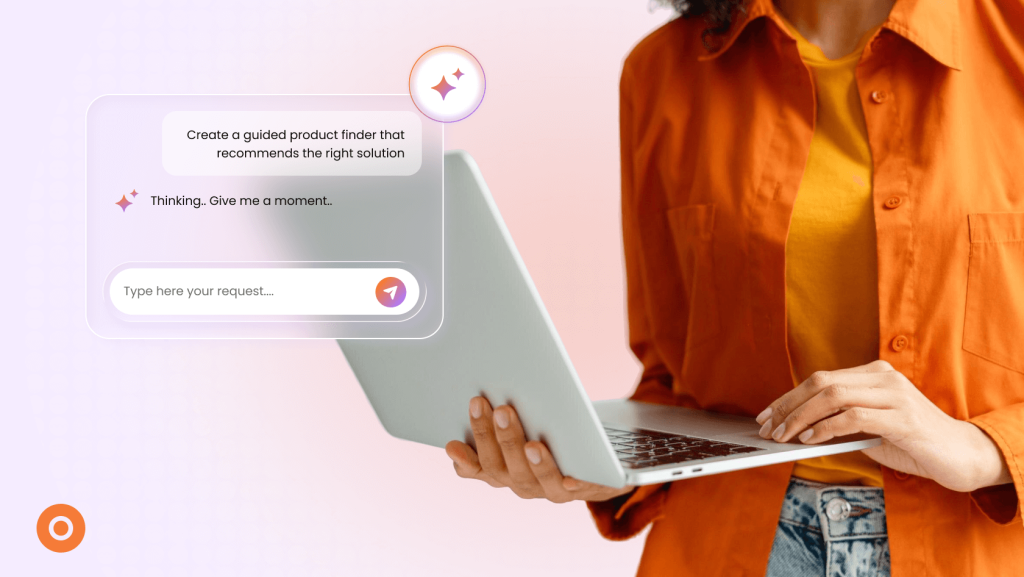
This is exactly why we created the Dot.vu AI Interactive Builder.
Instead of starting from a blank page, you simply describe what you want to build. A quick five-question quiz. An Interactive Calculator. A before-and-after slider. Within minutes, you have a working experience ready to refine.
You are not generating static text. You are building functional, logic-driven experiences. All with triggers. Actions. And more importantly, data capture built in. And you can do it all without writing a single line of code.
AI Content Marketing Requires Intention
AI content marketing is not about pushing out more content than everyone else. It is about being intentional.
It is about being intentional.
When AI becomes part of a responsive, audience-focused strategy, things start to shift. Your marketing approach evolves.
By combining smart planning with Interactive Experiences, you aren’t just filling up a feed. You are building a system that gets smarter every time someone clicks. That is how you turn a trend into a genuine growth engine.
Ready to see it in action?
Frequently Asked Questions
AI content marketing is the use of artificial intelligence to support your content strategy. It goes beyond generating text and focuses on improving planning, personalization, and performance using real data.
AI helps you spot trends. Identify gaps. Adjust campaigns based on performance. It also supports smarter decisions throughout the content process.
Set clear goals first. From there, you can use AI to guide planning. Personalize experiences. Improve campaigns as they run.
The AI Interactive Builder helps you create interactive experiences that do more than engage. It helps you by:
– Collecting real user input
– Tracking behavior
– Connecting directly to your CRM and marketing automation tools
From there, that data then feeds back into your marketing strategy. It helps you personalize messaging and improve performance based on real engagement.
It can create both individual components and full Interactive Experiences, such as:
– Quizzes
– Personality Tests
– Calculators
– Interactive Videos
– Product Recommenders
– Landing Pages
– Sliders, and more.