
TL;DR (Quick Summary)
If you’re looking for the best AI content marketing tools in 2026, the blog breaks down into four main categories: AI writing tools, AI SEO optimization platforms, AI-powered design and video tools, and interactive AI builders.
Some tools help you create content faster. Others help you optimize or automate it. A smaller group focuses on building personalized, Interactive Experiences designed to drive engagement and conversion.
This guide compares 15 AI content marketing tools and explains where each one fits in a modern marketing stack.
AI content marketing tools are everywhere right now.
New platforms launch weekly, each promising faster blog posts, smarter automation, and better results with less manual work.
The good news? Marketers have more leverage than ever.
Research shows most marketers are actually using it in real work now, with 88% saying AI plays a regular role in their day-to-day tasks.
The challenging part? Not all AI tools serve the same purpose — and many of them overlap. Some focus on generating content. Others optimize it. A few go further and help turn content into something interactive, personalized, and built to convert.
In 2026, AI in marketing isn’t just about producing more content. It’s about producing smarter content that engages, adapts, and performs.
This guide breaks down 15 of the best AI content marketing tools available today, covering everything from AI writing assistants and SEO platforms to interactive builders designed for conversion-focused experiences.
Table of Content:
- TL;DR (Quick Summary)
- 15 Best AI Content Marketing Tools in 2026
- Dot.vu (AI Interactive Content Builder)
- ChatGPT (AI Content Ideation & Writing)
- Jasper (AI Copywriting)
- Copy.ai (AI Marketing Copy & Automation)
- Surfer SEO (AI SEO Optimization)
- Clearscope (AI SEO Content Optimization)
- Frase (AI Research & Content Briefs)
- Canva AI (AI Visual Content Creation)
- Midjourney (AI Image Generation)
- HubSpot AI (AI Marketing Automation & CRM)
- GrammarlyGO (AI Writing Assistant)
- Synthesia (AI Video Creation)
- Typeform AI (Interactive Forms)
- Outgrow (AI Interactive Calculators & Quizzes)
- Klaviyo AI (AI Email Marketing & Ecommerce)
- What Is AI Marketing?
- Choose the Right AI Content Marketing Tools
AI Marketing Tools Compared: Capabilities, Depth & Use Cases
| Tool | Primary Use | Category | Personalization & Interactivity | Best For |
|---|---|---|---|---|
| Dot.vu – AI Interactive Builder | Builds AI-generated Interactive Content experiences | Interactive & Conversion-Focused AI | Advanced logic, branching, dynamic personalization, first-party data capture | Brands focused on engagement and conversion |
| ChatGPT | AI-driven content ideation and drafting | AI Content Writing | Limited (text-based personalization within prompts) | Fast brainstorming and draft generation |
| Jasper | AI-powered marketing copy generation | AI Copywriting | Limited | Scaling branded marketing copy |
| Copy.ai | AI-assisted marketing copy and workflows | AI Copy & Automation | Limited | High-volume short-form campaign content |
| Surfer SEO | AI-powered SERP and content optimization | AI SEO Optimization | None | Improving search performance |
| Clearscope | AI-driven keyword and topic optimization | AI SEO Content Optimization | None | Refining SEO-focused content |
| Frase | AI-assisted content briefs and research | AI SEO Research & Planning | None | Structured SEO content planning |
| Canva AI | AI-generated design and visuals | AI Visual Content | Minimal | Social graphics and marketing visuals |
| Midjourney | Generative AI image creation | AI Image Generation | None | Custom creative assets |
| HubSpot AI | AI-enhanced CRM and marketing automation | AI Marketing Automation | Moderate (behavioral workflow personalization) | B2B and inbound marketing teams |
| GrammarlyGO | AI-powered writing enhancement | AI Writing Assistant | None | Editing and tone refinement |
| Synthesia | AI-generated video from text scripts | AI Video Creation | Minimal | Scalable explainer and training videos |
| Typeform AI | AI-assisted interactive form creation | AI Interactive Forms | Moderate (conditional form logic) | Lead capture and surveys |
| Outgrow | AI-generated quizzes and calculators | AI Interactive Calculators & Quizzes | Moderate (rule-based personalization) | Interactive lead generation campaigns |
| Klaviyo AI | AI-driven email and ecommerce automation | AI Email & Ecommerce Marketing | Moderate (predictive and behavioral personalization) | Ecommerce lifecycle marketing |
15 Best AI Content Marketing Tools in 2026
There’s no shortage of AI marketing tools right now. The real difference is what they’re built for.
Some help you write faster.
Some help you rank better.
A few help you automate workflows.
And then there are tools designed to make content more interactive, personalized, and performance driven.
Below are 15 AI content marketing tools worth knowing in 2026 each playing a different role in a modern marketing strategy.
Dot.vu (AI Interactive Content Builder)

Most AI content marketing tools focus on generating text. They help you write faster, brainstorm ideas, or optimize for SEO.
But Dot.vu’s AI Interactive Builder is just built different.
Instead of just spitting out paragraphs, it builds actual working interactive components. Like… real quizzes, assessments, product recommenders, calculators — the kind with logic, branching, triggers, personalization. Not just something that looks interactive. Something that actually reacts to the user.
You type what you want in normal human language, and it generates a functional component inside the platform. And these aren’t just pretty visuals sitting there doing nothing. They adapt based on user input, collect first-party data, and guide people toward specific outcomes — whether that’s a product, a recommendation, or a next step.
For brands that want more than content generation — and are focused on engagement and conversion — this represents a shift in how AI supports marketing strategy.
Key Features
- AI-generated interactive components built from simple prompts
- Logic-driven personalization and branching
- Native lead capture and data collection
- Integration with CRM and marketing automation tools
- Full control over design, branding, and publishing
Best For
Marketing teams focused on engagement, personalization, and conversion-driven content experiences.
Limitations
More advanced than text-only AI tools, which means teams may need a clearer content strategy to maximize its capabilities.
If you want a deeper breakdown of how the AI interactive Builder works, you can explore this guide.
ChatGPT (AI Content Ideation & Writing)
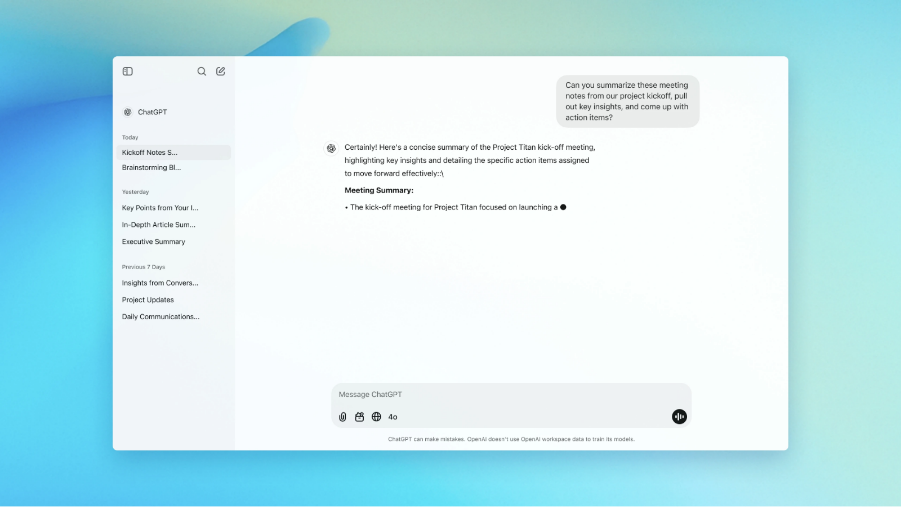
ChatGPT is that AI tool everyone and their boss is using right now — and honestly, fair. It’s fast, flexible, and can whip up anything from blog outlines and ad copy to email drafts and random research summaries when your brain just says “nope.”
For content marketers, it’s kind of a thinking buddy. Need headline ideas? Different angles? A messy first draft you can clean up later? It’s great for getting you past the terrifying blank-page moment and into “okay we have something to work with” territory.
But at the end of the day, it’s still mainly about generating text. Yes, it can personalize responses in a convo. No, it’s not building interactive flows, branching logic, or structured marketing experiences by itself. You get smart words. If you want the full interactive experience, you’re layering that somewhere else.
Key Features
- Blog outlines, drafts, and copy generation
- Brainstorming and ideation support
- Content repurposing and rewriting
- Research summaries and structured explanations
- Custom GPTs and workflow integrations
Best For
Marketers who need fast content ideation and draft generation across multiple formats.
Limitations
Requires human editing for brand voice, accuracy, and strategic alignment. Does not natively support interactive or logic-driven content formats.
Jasper (AI Copywriting)
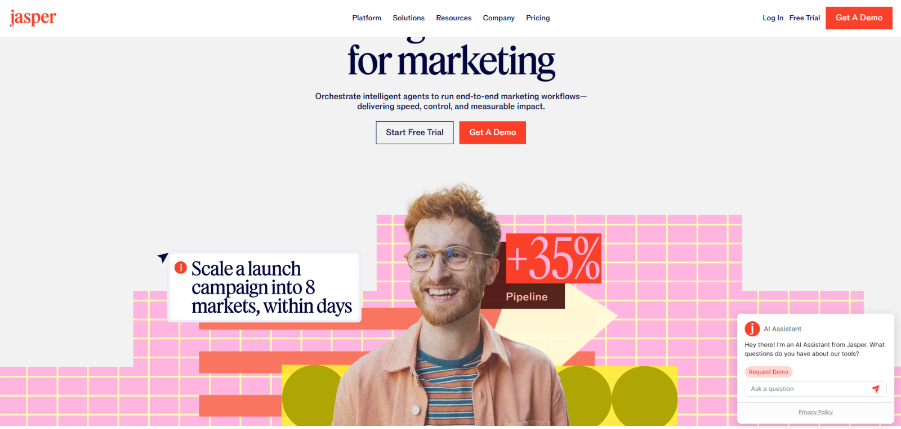
Jasper AI was one of the first AI copy tools that marketing teams actually took seriously. It’s basically built for cranking out campaign-ready stuff — blogs, ads, landing pages, emails — all the things marketers pretend don’t take forever.
Compared to more general AI tools, Jasper is very “I live in a marketing department.” It’s got templates, brand voice settings, collaboration features — all that structured, organized energy for teams who need everything to sound consistent and not like five different interns wrote it.
For content marketers managing multiple campaigns, it can reduce production time while maintaining tone and structure across assets.
Like most AI copywriting tools, however, its output is primarily static content. Interactive elements or logic-based personalization require external platforms.
Key Features
- Pre-built marketing templates
- Brand voice customization
- Campaign-based content workflows
- Blog, ad, and email generation
- Team collaboration features
Best For
Marketing teams scaling content production while maintaining brand consistency.
Limitations
Focused on static copy generation. Interactive and advanced personalization features require additional tools.
Copy.ai (AI Marketing Copy & Automation)
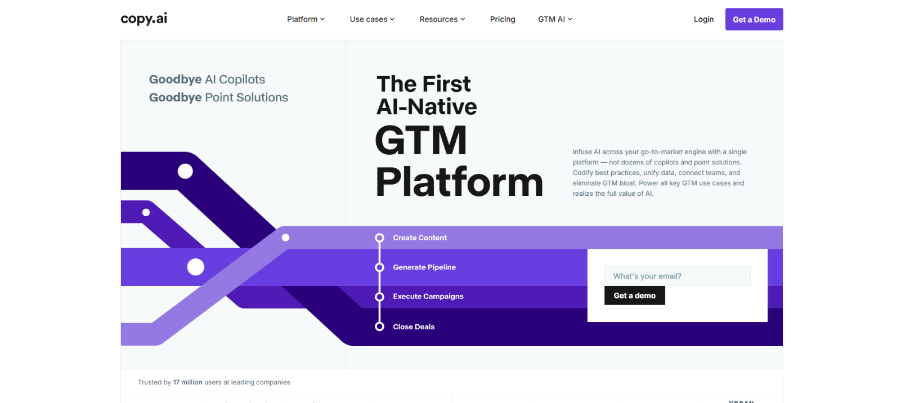
Copy.ai is basically that friend who’s really good at pumping out quick content when you’re on a deadline and mildly panicking. It shines with shorter stuff — social captions, ad variations, product descriptions, email sequences — the kind of copy you need in bulk and yesterday.
Over time, it’s moved beyond just “generate text” and leaned into workflow automation. So instead of manually rewriting the same thing 12 times, you can build repeatable processes and let it handle the heavy lifting. If your team is juggling a million campaigns across different channels, that’s honestly a lifesaver.
For brands constantly launching promos or posting across five social platforms at once, it helps cut down the repetitive grind. Less copy-paste chaos. More “okay cool, done.”
Like other AI copywriting tools, its strength lies in speed and automation. It does not natively create Interactive Content or logic-driven user experiences.
Key Features
- Social media and ad copy generation
- Email and product description templates
- Workflow automation tools
- Campaign-focused writing frameworks
- Team collaboration features
Best For
Marketing teams producing large volumes of short-form content across channels.
Limitations
Primarily focused on text-based output. Interactive and personalized content experiences require additional platforms.
Surfer SEO (AI SEO Optimization)
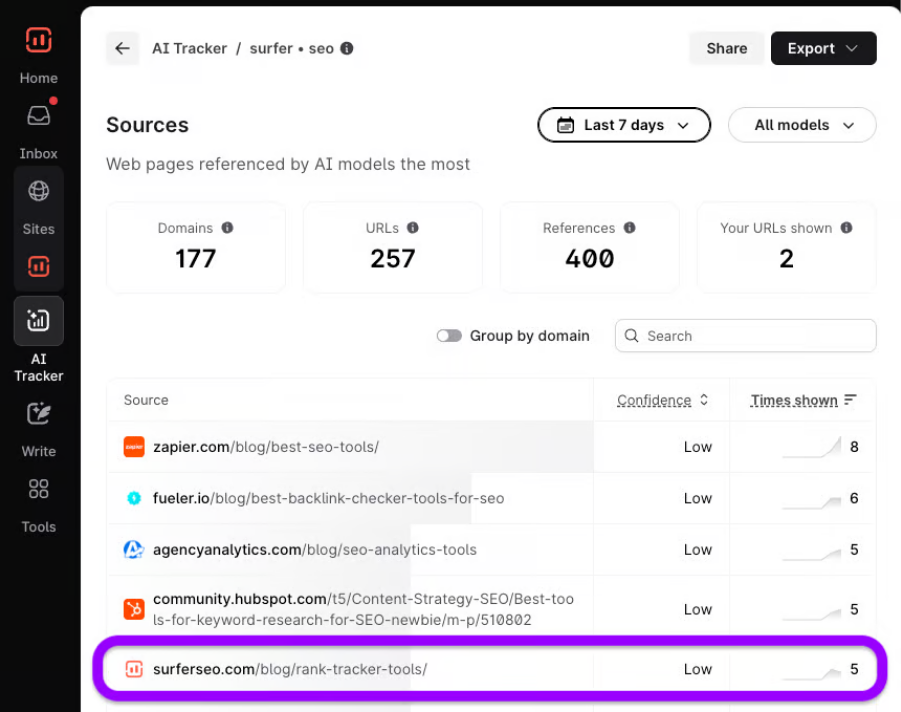
Surfer SEO uses AI-driven SERP analysis and natural language processing to help content rank more effectively in search engines. Organic search still drives the majority of website traffic (like… more than half), so yeah — SEO tools aren’t optional anymore.
Instead of you squinting at the top 10 results trying to decode the algorithm, Surfer analyzes them for you. It looks at what’s ranking for your keyword and spits out recommendations for structure, headings, keyword usage, content depth — all the nerdy stuff that actually moves the needle.
For content marketers focused on organic growth, Surfer acts as an AI optimization layer. You draft the content — Surfer’s algorithms help refine it to align with what’s already performing well in search.
It’s especially useful during the optimization phase, when you want to strengthen rankings without rewriting from scratch.
Surfer doesn’t generate interactive or personalized content experiences. Its strength lies in using AI to improve how static content performs in search.
Key Features
- AI-driven SERP analysis
- NLP-based keyword and topic recommendations
- Real-time content scoring
- Competitor breakdowns and benchmarking
- Content editor and audit tools
Best For
Content teams prioritizing organic traffic and AI-assisted SEO optimization.
Limitations
Focused strictly on search performance. Does not create interactive, personalized, or logic-based content experiences.
Clearscope (AI SEO Content Optimization)
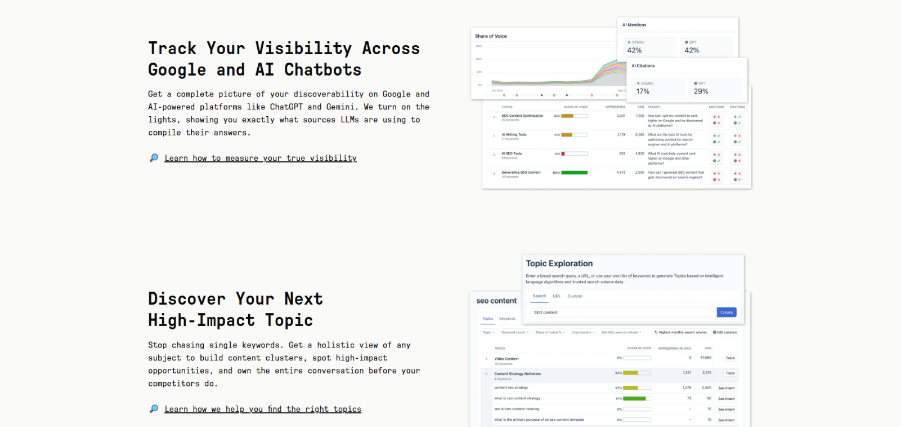
Clearscope is basically that SEO-obsessed friend who reads the top 10 Google results before you even finish your coffee. It uses AI to analyze what’s already ranking for a keyword, then tells you what topics, terms, and angles you’re missing.
Unlike general writing tools, Clearscope focuses specifically on improving content quality and SEO alignment. It’s not trying to be a full-on writing machine. It’s more like a content coach standing over your shoulder going, “Hey… maybe you should mention this. And this. And also this.” Slightly annoying. Very helpful.
For marketers working on high-value pages where rankings matter, Clearscope provides clarity on what’s missing and where improvements can be made.
But let’s be clear: it’s a refinement tool. It makes static content better, it does not generate Interactive Experiences. Its role is to enhance static content performance through AI-driven analysis.
Key Features
- AI-powered keyword and topic recommendations
- Content grading and scoring system
- Competitive SERP analysis
- Integration with writing platforms
- Optimization guidance for existing content
Best For
Content teams focused on improving rankings and aligning content with search intent.
Limitations
Primarily focused on SEO optimization. Does not support interactive, logic-driven, or personalized content formats.
Frase (AI Research & Content Briefs)
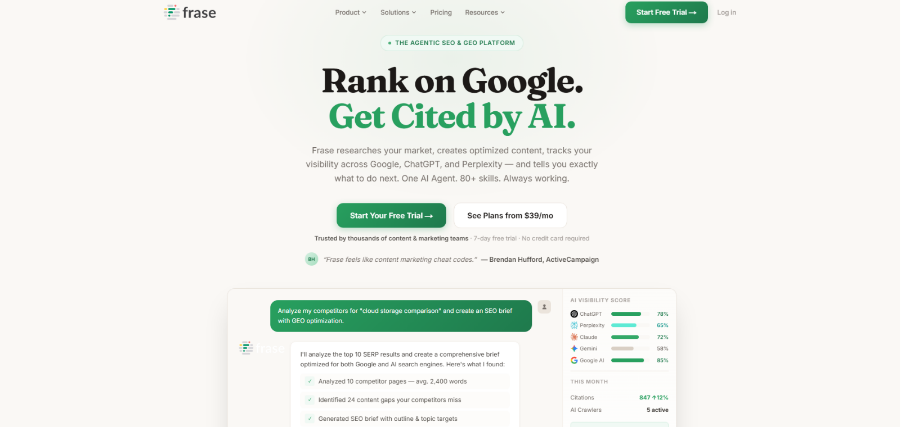
Frase is for people who hate starting from a blank page. Instead of you staring at Google for 45 minutes pretending that’s “research,” it pulls in SERP data, competitor content, and search intent and hands you a structured outline to start with.
It uses machine learning and NLP to figure out what questions people are asking, what topics keep showing up, and what patterns Google seems to reward. So instead of guessing what to include, you get a blueprint that’s actually based on reality.
Yeah, it can generate drafts too. But honestly? Its real power move is in the research and planning. If you’re building SEO-focused content and don’t want to manually dissect 10 ranking articles every single time, it saves you from that spiral.
Like other SEO-focused AI tools, Frase supports the creation of static content. It does not create interactive or personalized content experiences without additional platforms.
Key Features
- AI-generated content briefs and outlines
- SERP analysis and competitor research
- Question and topic clustering
- Draft generation capabilities
- Content optimization tools
Best For
Marketing teams that want AI-assisted research and structured SEO content planning.
Limitations
Primarily supports static content workflows. Interactive or logic-driven content experiences require external tools.
Canva AI (AI Visual Content Creation)
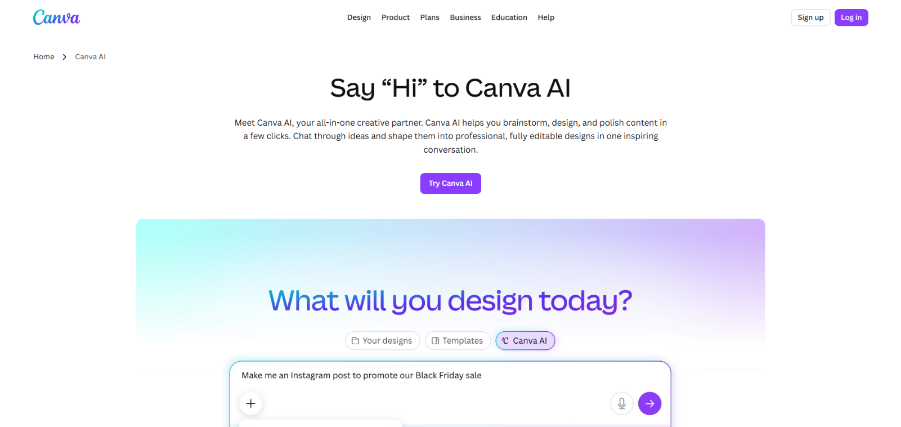
Canva AI brings generative design tools into everyday marketing workflows. You don’t need to be a full-blown designer to make something that doesn’t look tragic anymore. With stuff like Magic Design, AI image generation, background removal, and layout suggestions, it makes visual content way less painful.
For content marketers, it’s useful when you suddenly remember your blog post needs a header image, your social campaign needs five sizes, and your landing page looks a little… empty. Instead of juggling three different tools, you can design, resize, tweak, and test variations all in one place.
The AI part mostly helps you skip the “uhhh what layout do I pick” spiral. It suggests designs, adjusts visuals, and can even generate images from text prompts when you’re feeling creative but slightly clueless.
While Canva AI enhances visual production, it focuses on static assets rather than interactive or logic-driven experiences. It helps you look good — it doesn’t turn your content into something that responds back.
Key Features
- AI-powered image generation
- Automated layout and design suggestions
- Background removal and image editing tools
- Brand kit integration
- Multi-format content resizing
Best For
Marketing teams creating visual assets for blogs, social media, and campaigns.
Limitations
Primarily supports static visual content. Does not create interactive, personalized, or adaptive marketing experiences.
Midjourney (AI Image Generation)
Midjourney is your artsy AI friend who turns your random text prompts into dramatic, hyper-detailed visuals. You type what you want, and it spits out illustrations, concept art, moody campaign visuals — the kind of stuff that doesn’t look like it came from page three of a stock photo site.
For content marketers, it’s especially nice when stock images start feeling… painfully generic. If a campaign needs a specific vibe or a weirdly specific aesthetic, you can just generate it instead of digging through 400 almost-right images.
The cool part is the flexibility. The better (and more specific) your prompt, the better the result. So if your brand has a strong visual identity or you’re experimenting with something bold, it gives you room to play.
But that’s where it stops. It’s about images. No automation, personalization, or interactive logic. It makes the visuals — you figure out what to do with them after.
Key Features
- AI-generated images from text prompts
- High-resolution, stylized visual outputs
- Customizable artistic direction
- Continuous model updates
- Community-driven prompt refinement
Best For
Marketing teams seeking custom visuals and creative assets beyond traditional stock imagery.
Limitations
Limited to static image generation. Does not support Interactive Content, personalization logic, or performance tracking natively.
HubSpot AI (AI Marketing Automation & CRM)
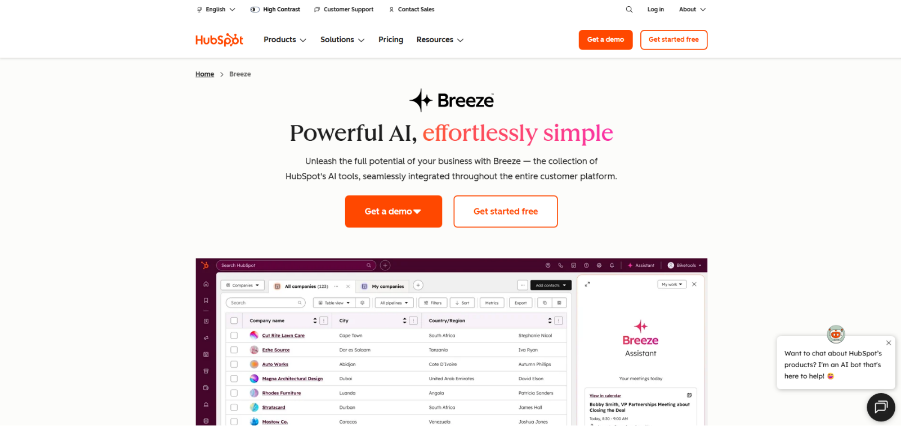
HubSpot AI isn’t a separate shiny tool you log into. It lives inside the HubSpot ecosystem and quietly upgrades the stuff you’re already doing. Email drafts, content suggestions, predictive lead scoring, campaign tweaks — it slips AI into the workflow instead of reinventing it.
For content marketers, that means help with landing page copy, email variations, report summaries, and even personalizing journeys based on actual behavioral data. The interesting part is that it’s not guessing in a vacuum. It’s pulling from CRM insights, so messaging can shift depending on where someone is in the funnel.
Because it’s built into a bigger automation machine, most teams use it to optimize and scale what’s already running. It’s about refining campaigns, not creating interactive formats from scratch. You’re improving the engine — not building a whole new experience layer.
Key Features
- AI-assisted email and landing page generation
- Predictive lead scoring
- Automated workflow optimization
- CRM-based personalization
- Reporting and performance summaries
Best For
B2B and inbound marketing teams using CRM-driven campaigns and lifecycle automation.
Limitations
Primarily enhances existing marketing workflows. Does not natively create interactive, logic-driven content experiences.
GrammarlyGO (AI Writing Assistant)
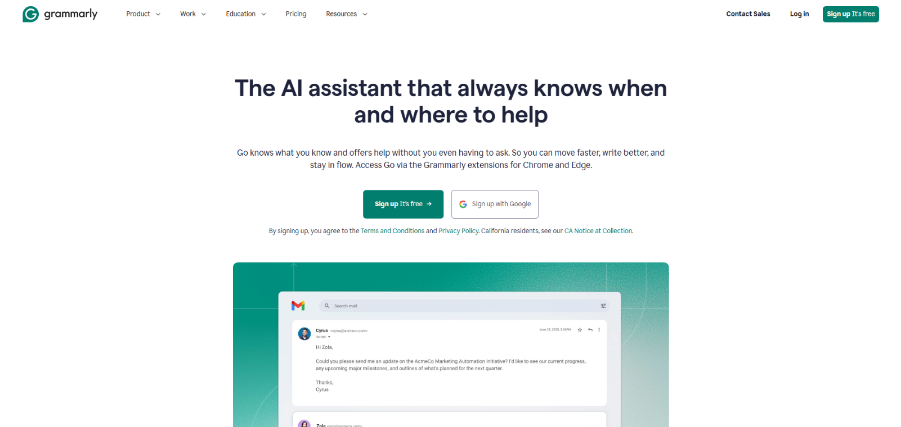
GrammarlyGO takes regular Grammarly and adds a little generative AI brain on top. So instead of just fixing your commas, it can rewrite sentences, adjust tone, or stretch a half-baked thought into something that actually sounds complete.
For content marketers, it’s less about creating something from scratch and more about cleaning things up. You’ve got a draft — maybe you wrote it, maybe another AI did — and it helps tighten the wording, smooth out awkward phrasing, and make sure the tone doesn’t randomly switch personalities halfway through.
It’s not trying to be a full content machine. It’s more of a polish-and-refine tool. You bring the material, it helps make it clearer and more on-brand. Structured campaigns, interactive flows, big marketing builds? That’s outside its lane. It’s here to improve what’s already on the page, not architect the whole experience.
Key Features
- AI-powered rewriting and expansion
- Tone and clarity adjustments
- Grammar and style corrections
- Context-aware suggestions
- Integration across email and writing platforms
Best For
Marketers who want AI-assisted editing and refinement across daily communication and content workflows.
Limitations
Focused on writing enhancement. Does not generate interactive, personalized, or logic-based content formats.
Synthesia (AI Video Creation)
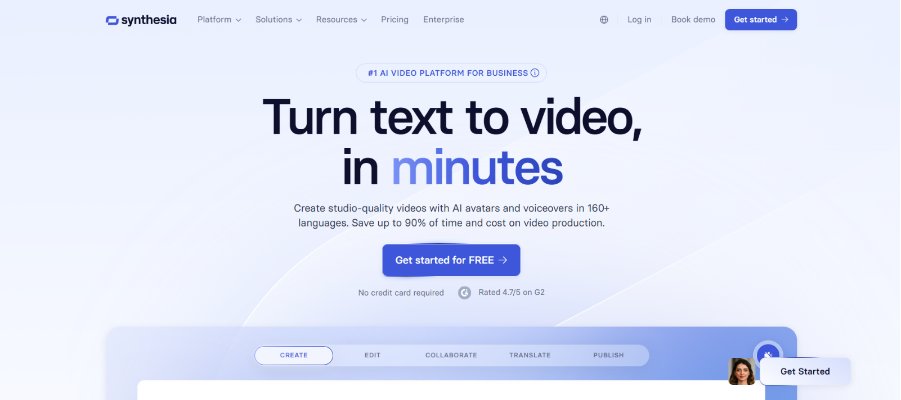
Synthesia lets you create videos without dragging out a camera, booking a studio, or convincing someone to be on screen. You write a script, pick an AI avatar, and it generates a finished video for you.
For content teams, that’s a huge time saver. Product explainers, onboarding walkthroughs, internal updates, even localized versions for different markets — you can spin those up way faster than traditional video production would allow.
Where it really shines is scalability. Need the same video in five languages? Or slightly tweaked for different audience segments? You’re not starting from scratch every time. You adjust the script and generate a new version.
That said, it’s focused on video creation. You can embed the videos into campaigns, sure. But the platform itself isn’t building interactive flows or branching logic. It delivers polished video content — the personalization layer has to happen somewhere else.
Key Features
- AI-generated video from text scripts
- Customizable avatars and voice options
- Multi-language video creation
- Template-based video workflows
- Fast turnaround production
Best For
Marketing teams producing explainer videos, training content, or scalable video campaigns.
Limitations
Limited to linear video outputs. Does not create interactive, logic-driven, or adaptive content experiences.
Typeform AI (Interactive Forms)
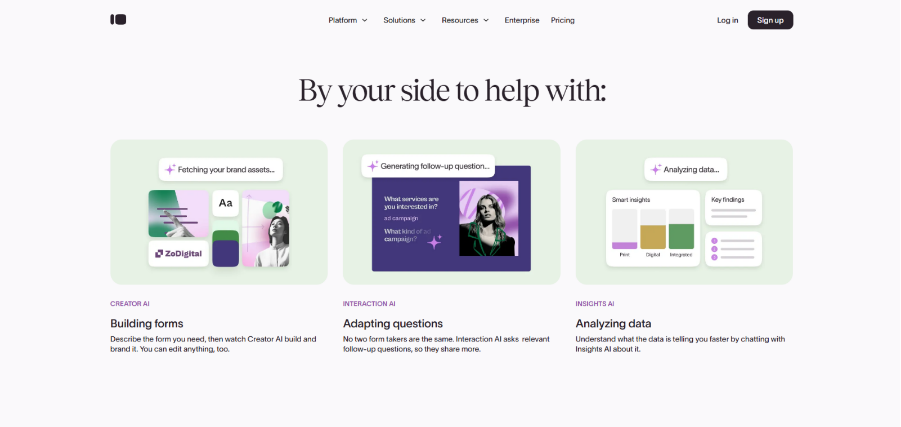
Typeform AI helps you build forms and quizzes without staring at a blank screen wondering what questions to ask. You describe what you’re trying to do — lead capture, feedback, quick quiz — and it generates a starting structure for you. Way less manual setup.
For content marketing, it’s solid for gated content, surveys, simple quizzes, and collecting leads without making people feel like they’re filling out a tax document. The conversational layout definitely feels smoother than old-school static forms, which can help with completion rates.
There’s some personalization in there too. Conditional logic lets you show different questions depending on what someone answered before. So it’s not completely one-size-fits-all.
But the interactivity stays within the form world. It’s branching questions, not full experience journeys. You’re not building multi-step product recommenders or deeper logic-driven paths. It captures input and adapts the flow a bit — it doesn’t architect the entire interactive experience layer.
Key Features
- AI-generated forms and survey questions
- Conditional logic and branching
- Lead capture integrations
- Conversational form design
- Data collection and reporting
Best For
Marketing teams using quizzes, surveys, and forms for lead generation and audience insights.
Limitations
Interactivity is limited to form-based logic. Does not support broader Interactive Content formats or advanced personalization flows.
If you’re comparing form builders more broadly, here’s a breakdown of Google Forms alternatives and how they differ.
Outgrow (AI Interactive Calculators & Quizzes)
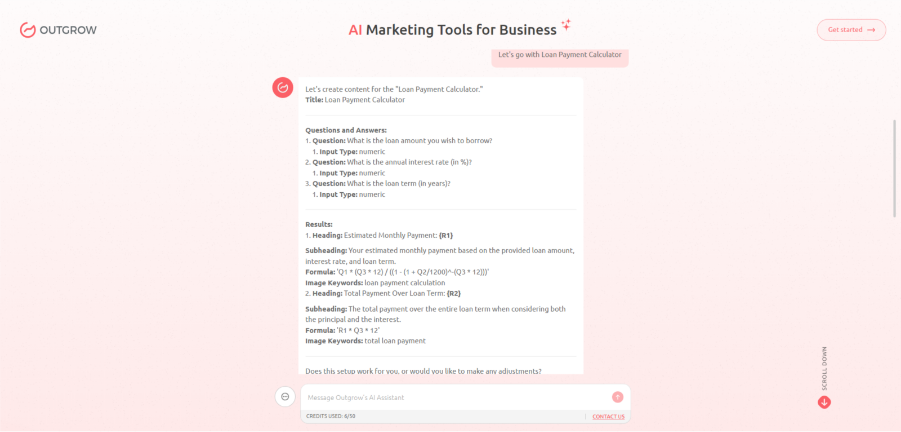
Outgrow blends Interactive Content with AI help, so you’re not building quizzes and calculators from scratch. You can drop in a prompt or describe your business, and it’ll generate structured questions, answer options, even result screens for you. Big time saver when you just need to get something live.
There’s also a chat-style AI feature that helps you brainstorm, tweak wording, and adjust logic while you’re building. And if you already have content sitting somewhere — like a blog post or document — you can import it and turn it into an interactive format instead of rewriting everything.
For content marketing teams, it’s usually used for lead gen. Calculators and assessments are the sweet spot, especially when you want engagement plus data capture. The AI speeds up setup, and the built-in rule-based logic lets you personalize outcomes without too much technical headache. A lot of brands pair quizzes and calculators with gamified marketing tactics to make participation feel less… form-like.
Most of the customization lives inside templates. You get branching and personalization, but within predefined structures. It’s flexible — just not fully open-ended in the way more advanced, logic-heavy platforms can be.
Key Features
- AI-powered quiz and calculator generation
- Chat-based AI content assistant
- Content import and interactive conversion tools
- Rule-based logic and scoring
- Lead capture and CRM integrations
- Performance analytics and reporting
Best For
Marketing teams running AI-assisted interactive lead generation campaigns using quizzes and calculators.
Limitations
Interactivity and personalization are primarily template-driven. Advanced, fully customizable logic workflows may require more specialized platforms.
Klaviyo AI (AI Email Marketing & Ecommerce)
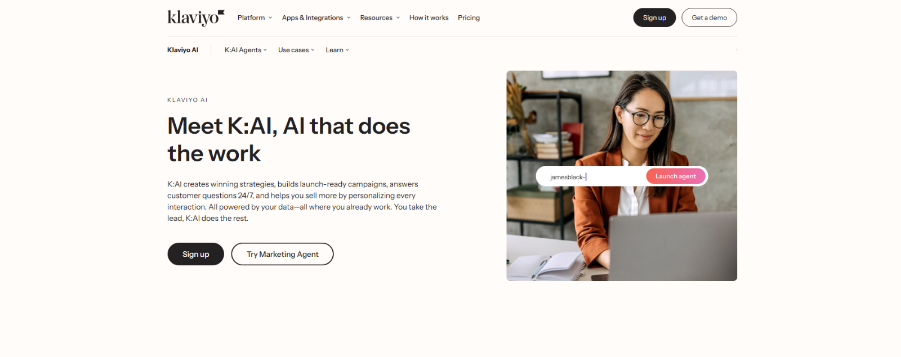
Klaviyo AI leans hard into ecommerce email. Instead of blasting the same newsletter to your entire list and hoping for the best, it looks at customer behavior and adjusts things behind the scenes — timing, product recommendations, lifecycle flows, all of it.
For content marketers in ecommerce, that means your emails can actually reflect what people are doing. Browsed something? Abandoned a cart? Bought three times in a month? The messaging can shift based on that data instead of staying generic. The AI can also suggest subject lines, draft email copy, and figure out when someone is most likely to open.
Where it really earns its keep is behavioral personalization tied to revenue. It’s constantly optimizing segmentation and targeting so campaigns feel more relevant — and ideally, convert better.
While it supports dynamic content within emails, it does not create standalone Interactive Content experiences outside of the email environment.
Key Features
- AI-driven product recommendations
- Predictive send-time optimization
- Automated lifecycle and abandoned cart flows
- AI-assisted email copy suggestions
- Behavioral segmentation and analytics
Best For
Ecommerce brands using AI-driven personalization to increase email engagement and revenue.
Limitations
Primarily focused on email and ecommerce automation. Does not create interactive, logic-driven content experiences beyond email campaigns.
What Is AI Marketing?
AI marketing is simply the use of artificial intelligence to make marketing smarter and more efficient.
That sounds broad — because it is.
In practice, it means using AI tools to analyze data, generate content, automate repetitive tasks, personalize messaging, and improve performance over time. Instead of guessing what might work, marketers can rely on patterns, predictions, and real-time insights.
Across teams, the majority say AI actually makes content better and faster to produce, with 85% reporting an uptick in quality thanks to AI help.
It doesn’t replace strategy or creativity.
It removes some of the friction and gives teams better information to work with.
What Is AI Used for in Marketing?
AI in marketing isn’t one thing. It shows up in different layers of the workflow.
Sometimes it’s behind the scenes, analyzing behavior.
Sometimes it’s front and center, generating content or powering experiences.
Here’s where AI is most commonly used:
Content creation
AI tools can generate blog drafts, ad copy, email sequences, video scripts, and more. They speed up production — especially in early-stage drafting.
SEO optimization
AI helps analyze search intent, identify ranking patterns, and suggest improvements so content aligns better with what users are searching for.
Personalization
AI makes it possible to tailor content based on user behavior and preferences with dynamic email recommendations up to conditional quiz results.
If you think personalization is a buzzword — the data disagrees: over 92% of businesses are already using AI-driven personalization to drive growth.
Automation
AI supports workflow automation — scheduling campaigns, triggering emails, scoring leads, and optimizing send times.
Data analysis and prediction
Predictive analytics helps marketers anticipate trends, segment audiences, and prioritize high-intent prospects.
Interactive and adaptive experiences
Some AI tools go beyond static content and power logic-driven experiences that adjust in real time based on user input. These formats are often referred to as Interactive Content, and they play a growing role in engagement-driven strategies.
That range is what makes AI useful in marketing. Different tools solve different problems, and the real advantage comes from knowing when to use each one.
Choose the Right AI Content Marketing Tools
The AI marketing landscape isn’t slowing down. New tools will keep launching. Features will keep expanding. Promises will keep getting bigger.
What won’t change is this: tools are only as powerful as the strategy behind them.
The real advantage comes from building a stack that supports how you actually market — whether that’s SEO-driven content, automated lifecycle campaigns, or Interactive Experiences designed to convert.
AI can speed things up. It can surface insights. It can personalize at scale.
But choosing the right combination of tools is what turns those capabilities into results. That’s especially true when AI is layered into a broader content marketing strategy.
That’s where clarity matters.
If you’re serious about using AI to create smarter, performance-driven content — not just more of it — try building your first Interactive Experience by signing up for a free trial and see how the AI Interactive Builder works in practice.