Technology changes quickly. Customer expectations change even faster.
So, what makes a technology partnership last?
For Dot.vu and AS Watson Group, the answer has been eight years of collaboration centered on a shared goal: finding better ways to create engaging, connected, and personalized customer experiences.
After eight years of working together, Dot.vu and AS Watson Group have built a long-standing technology partnership focused on creating engaging digital customer experiences. In 2026, that relationship took another step forward when Dot.vu was appointed as one of the Group’s 31 global strategic technology partners.
Here are some of the lessons we’ve learned along the way.
Start With the Problem, Not the Technology
It is easy to get distracted by what new technology can do. But a successful technology partnership starts somewhere else: with the problem that needs to be solved.
- What does the customer need?
- Where is there friction in their journey?
- What could make an existing experience easier, more engaging, or more useful?
The technology comes next.
One example from our collaboration with AS Watson came from Watsons Singapore, which wanted to rethink the traditional loyalty stamp collection experience.
The goal was not simply to make physical stamp cards digital. Watsons Singapore wanted to reduce paper consumption, engage customers, particularly younger audiences, and improve the speed and accuracy of tracking stamp issuance and voucher redemption.
That gave us a clear problem to solve together.
Turn Familiar Experiences Into Better Digital Ones
The result was a Digital Stamp Game that changed a familiar retail mechanic into a mobile Interactive Experience.
Instead of carrying a physical stamp card, customers could access their personalized digital game through a link sent by SMS. Each customer could register for an account, collect stamps digitally, and display a QR code in-store for cashiers to issue or redeem stamps and vouchers.
Stamp and voucher activity could also be tracked digitally, giving Watsons Singapore a faster and more accurate way to analyze the campaign.
For customers, it made the experience easier to keep with them and use during future visits. For Watsons Singapore, it created a new way to engage existing and potential customers while reducing reliance on physical materials.
The technology mattered. But what mattered more was how it improved an experience customers already understood.
Connect Digital Experiences With Real Customer Journeys
The Watsons Singapore Digital Stamp Game also demonstrates something that has become increasingly important in retail: digital and physical experiences do not need to exist separately.
The experience began on a customer’s phone but continued inside the store.
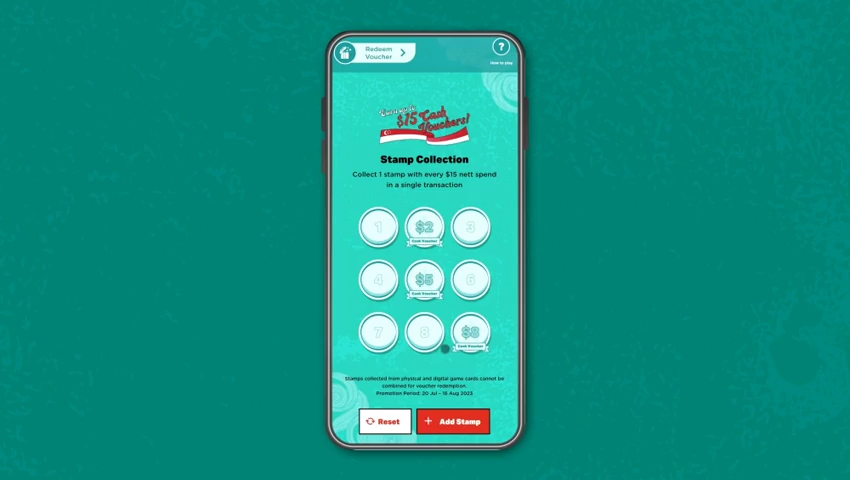
Customers could access their personalized game digitally, then use their QR code during an in-store interaction to collect stamps or redeem rewards. The experience connected digital engagement with a physical shopping journey rather than asking customers to choose between the two.
That same idea sits at the heart of AS Watson’s O+O, or Offline plus Online, strategy today.
O+O focuses on connecting physical and digital retail experiences so customers can move more seamlessly across channels. As customer journeys become increasingly connected, technology needs to support the entire experience rather than a single touchpoint.
Build a Partnership That Can Evolve
Eight years is a long time in technology.
Platforms evolve. New channels emerge. Customer expectations shift. Business priorities change. And, more recently, AI has changed what teams expect from the technology they use.
Long-term technology partnerships need to evolve with them.
For Dot.vu, that has meant continuing to expand how businesses can create Interactive Experiences. Teams can build experiences including product finders, calculators, marketing games, interactive videos, presentations, flipbooks, quizzes, and more while connecting engagement with personalization, customer data, and measurable outcomes.
AI is now adding another layer to that process.
With the Dot.vu AI Interactive Builder, teams can describe the experience they want to create and generate an interactive starting point using AI. The AI can help shape content, design, logic, branding, and interactions while suggesting improvements and validating the experience before delivery.
The tools have changed considerably. The principle behind them has not: technology should help turn ideas into experiences that serve a clear customer or business need.
Collaboration Matters as Much as Capability
A strong technology partnership is not simply about having access to the right platform.
It also requires an understanding of the business, open communication, shared knowledge, and the flexibility to respond as priorities change.
This is also reflected in AS Watson’s Technology Partnership Programme. The programme brings together global technology companies across areas including AI, machine learning, online business, store systems, supply chain technology, cyber security, robotics, data visualization, and scalable technology platforms.
Rather than treating these technologies as isolated solutions, the programme creates an ecosystem where AS Watson and its partners can exchange knowledge, explore opportunities, and support its wider transformation.
For us, being part of that ecosystem creates an opportunity to bring eight years of collaboration into a much broader conversation about the future of customer experience.
The Next Chapter With AS Watson
After eight years of collaboration, Dot.vu and AS Watson have built a long-standing technology partnership centered on creating more engaging and connected customer experiences.
In June 2026, that partnership reached a new milestone when Dot.vu was appointed as one of AS Watson Group’s 31 global strategic technology partners during Technology Partner Day 2026. The appointment builds on the work and relationship already established between the two companies while supporting the next phase of AS Watson’s AI-powered O+O transformation.
As AS Watson continues investing in technology, data, and AI across its international operations, the partnership creates further opportunities to explore how interactive, personalized, and data-driven experiences can support increasingly connected customer journeys.
Technology will keep changing. So will the ways customers interact with brands.
Eight years of working together has shown us that lasting technology partnerships grow by solving real problems, sharing knowledge, and evolving alongside changing customer and business needs.