Pharmaceutical marketing has a tiny little problem.
The products are complicated.
Like, really complicated.
You’re dealing with treatments, therapies, clinical information, mechanisms of action, eligibility criteria, administration guidance, safety information, patient support programs, and a whole vocabulary that sounds perfectly normal to someone who works in healthcare and slightly terrifying to everyone else.
Then marketing enters the room and says:
“Okay. Now make people engage with it.”
Cute.
The challenge for pharmaceutical brands is that people usually need to understand the information before they’re ready to do much with it. And that challenge is bigger than it might seem. According to the CDC, nearly 9 in 10 adults struggle to understand and use health information when it contains unfamiliar or complex terms.
Healthcare professionals need enough detail to evaluate products confidently. Patients need accessible information that supports health literacy and helps them understand conditions, treatment options, and the questions they should be asking.
That makes education a pretty important part of pharmaceutical marketing.
And no, dumping everything into a 46-page PDF technically labelled “Patient Resources” does not automatically count as an engaging educational experience.
Pharmaceutical marketing has to earn attention differently
A skincare brand might get away with showing someone glowing dramatically next to a bottle.
Pharma has a slightly higher difficulty setting.
People interacting with pharmaceutical content often arrive with genuine questions:
- What does this treatment do?
- How does it work?
- Who is it relevant for?
- What does this condition mean?
- What should I discuss with my healthcare provider?
- Where do I find more information?
The job of pharmaceutical marketing is therefore bigger than getting a product name in front of someone.
It needs to help people make sense of complicated information.
That means clear explanations such as:
- Useful resources.
- Logical journeys.
- Credible content.
And perhaps most importantly, information people can navigate without feeling like they’ve accidentally enrolled in medical school.
Complexity creates friction
A WHO survey across 17 countries found that 25% to 75% of adults in participating countries had limited health literacy. There is a lot that pharmaceutical brands need to communicate.
Pharmaceutical products sit within complex research, approval, safety, and monitoring processes, as illustrated by the FDA’s drug development process.
Unfortunately, putting all of that information on one page does not magically make it understandable.
- Dense copy creates friction.
- Medical terminology creates friction.
- Long documents create friction.
Pages packed with equally important information create a truly heroic amount of friction.
And once understanding becomes difficult, engagement usually follows it straight out the door.
This matters for healthcare professionals too.
HCPs already deal with enormous amounts of information. A pharmaceutical brand asking them to read another giant wall of text is competing with approximately seventeen thousand other things requiring their attention that day.
Educational content needs structure. Using clear communication and plain language can also make health information easier for patients to understand.
Give people somewhere to start.
Let them choose what they want to explore.
Break complicated topics into smaller pieces.
Add interaction where it genuinely helps someone understand the subject.
This is where Interactive Experiences become interesting because it gives people an active role in how they consume information, which is also why they’re becoming an increasingly useful part of healthcare marketing.
Interactive Experiences make pharmaceutical education easier to explore
Interactive Experiences give people an active role in how they consume information.
See how Dot.vu supports healthcare marketing with Interactive Experiences.
Instead of presenting every possible piece of content at once, pharmaceutical companies can build guided experiences that reveal information based on what someone wants to learn.
That small change makes complex topics feel much less overwhelming.
Someone learning about a disease might explore symptoms, risk factors, treatment considerations, and support resources at their own pace.
An HCP researching a therapy might navigate clinical information, product details, educational materials, and relevant resources based on their immediate needs.
The information stays comprehensive.
The experience becomes easier to digest.
Big difference.
Still relying heavily on PDFs and static pages?
See why Interactive Content gives audiences more ways to participate than static content.
1. Turn complicated information into Interactive Infographics
Traditional infographics are great until there are twelve sections, four diagrams, seven footnotes, and a molecule floating somewhere near the bottom.
Interactive Infographics give that information room to breathe.
Users might click through different stages of a disease pathway, explore treatment mechanisms, open supporting explanations, or reveal additional information when they need it.
This works especially well for:
- Disease education
- Mechanism-of-action explanations
- Treatment pathways
- Patient journey education
- Clinical or scientific information
- Awareness campaigns
Instead of asking visitors to absorb everything immediately, the experience lets curiosity lead the way.
Much nicer for the brain.
2. Use Assessments to make education personally relevant
Sometimes people know they need information.
They just have no clue where to begin.
Assessments help give educational content a starting point.
A disease-awareness experience, for example, might ask visitors about topics they want to learn more about and guide them toward relevant educational materials.
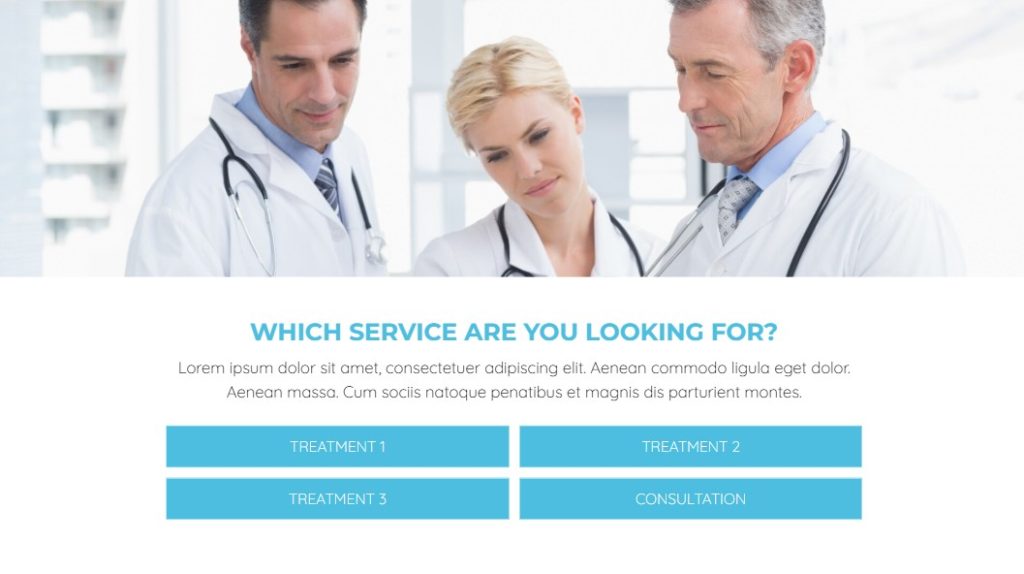
Another assessment might help healthcare professionals identify which product resources are most useful for the situation they are researching.
The important part here is purpose.
A good pharmaceutical Assessment shouldn’t feel like someone slapped a quiz onto a healthcare page because “interactive” was on the marketing bingo card.
- The questions should help organize information.
- The result should help the user continue learning.
- That gives the interaction a reason to exist.
3. Help people navigate product information with Product Finders
Pharmaceutical portfolios get complicated quickly because there’s always different products, formulations, indications, supporting resources, and audiences. Suddenly your navigation has navigation.
A Product Finder gives users a more guided way to explore what is available.
Healthcare professionals might answer a small number of questions related to the information they are looking for, then receive relevant product or resource recommendations.
It reduces the amount of hunting around.
And fewer people wandering through sixteen browser tabs trying to remember where they saw that one useful document is generally a good thing.
4. Reinforce learning with Knowledge Quizzes
Yes, quizzes have a place in pharmaceutical marketing.
No, we are not suggesting:
“Which prescription medicine matches your personality?”
Absolutely not.
Educational Knowledge Quizzes work best when they reinforce information someone has already explored.

They could support:
Disease-awareness campaigns
- HCP education
- Training programs
- Conference experiences
- Product education
- Internal learning initiatives
A visitor could read about a healthcare topic and then test their understanding through a short interactive quiz.
The format makes education more active and gives the user a reason to stay engaged for a little longer.
It also beats asking someone to reread the same paragraph four times because their brain quietly left the meeting.
5. Build educational resource hubs people actually want to use
Pharmaceutical brands often have plenty of educational content.
The problem is finding it.
You might have videos, brochures, research, product information, patient resources, FAQs, educational articles, and downloadable materials scattered across different pages.
An interactive resource hub brings that material into one structured experience.
Visitors can explore resources by topic, audience, format, condition, product, or another relevant category.
This creates a central destination for education instead of making users hunt through the website like they’re completing a side quest.
Resource hubs are especially useful when the customer journey involves repeat visits.
Someone rarely learns everything they need in one session.
A well-organized educational destination gives them somewhere useful to return to.
Start with something ready-made
Explore Interactive Experience templates and customize one for your next healthcare campaign.
Better education creates better engagement
There is a temptation in marketing to make engagement the goal.
Clicks, interactions, time spent on page, form submissions. Those numbers matter.
But pharmaceutical marketing has an extra layer.
The interaction should help someone understand something.
That changes how Interactive Experiences should be designed.
- A click should reveal useful information.
- A recommendation should guide someone toward an appropriate resource.
- A question should help personalize the journey. Interactive Experiences can also generate richer audience insights by capturing the choices, preferences, and answers people actively share.
When interaction has a purpose, engagement starts feeling less like a marketing trick and more like part of the educational experience.
That is a much stronger place for pharmaceutical brands to be.
Education also gives pharmaceutical content somewhere to go next
Educational content shouldn’t end with:
“Cool. Thanks for reading.”
Each experience should help visitors continue the journey.
Someone exploring disease-awareness content might be directed toward additional resources.
An HCP researching a product might continue into clinical information.
A visitor completing an assessment might receive relevant educational materials.
Someone interacting with an infographic might explore a deeper resource hub afterward.
This creates a connected experience across the customer journey instead of a collection of random pages politely existing near each other.
And that connection matters.
Because people rarely arrive ready for your final marketing message.
Most need context first.
- Then understanding.
- Then another question.
- Then possibly another resource.
Pharmaceutical marketing works better when the experience supports that process instead of trying to rush past it.
Got an idea already? Skip the blank canvas.
Describe the Interactive Experience you want to create and use Dot.vu’s AI Interactive Builder to generate a starting point.

Make complicated information feel less complicated
Pharma will never be a simple industry.
There will always be complex products, detailed information, important terminology, and strict requirements around how that information is communicated.
The experience surrounding that information does not need to feel equally complicated.
Interactive Experiences give pharmaceutical companies more flexible ways to educate patients, support healthcare professionals, explain products, raise disease awareness, and organize large amounts of information into journeys people can navigate.
Less scrolling through walls of copy.
- More exploration.
- More context.
- More meaningful engagement.
And hopefully fewer PDFs named something like:
FINAL_Product_Education_Brochure_v17_UPDATED_FINAL2.pdf
We all deserve better.
Create more engaging pharmaceutical experiences with Dot.vu
Explore how Dot.vu helps healthcare and pharmaceutical teams create Interactive Experiences for education, engagement, product exploration, and customer journeys.
Visit the Healthcare Industry Page to explore relevant solutions, browse Interactive Experience use cases such as Assessments, Product Finders, Interactive Infographics, Quizzes, and resource hubs, and dive into additional healthcare marketing resources for more inspiration.
Ready to create your own Interactive Experience?
Build engaging healthcare experiences with Dot.vu and turn complex information into something people want to explore.