TL; DR
Interactive Content software helps marketers create digital experiences that people can actively engage with. Instead of simply reading, watching, or scrolling past, your users can take part in the experience.
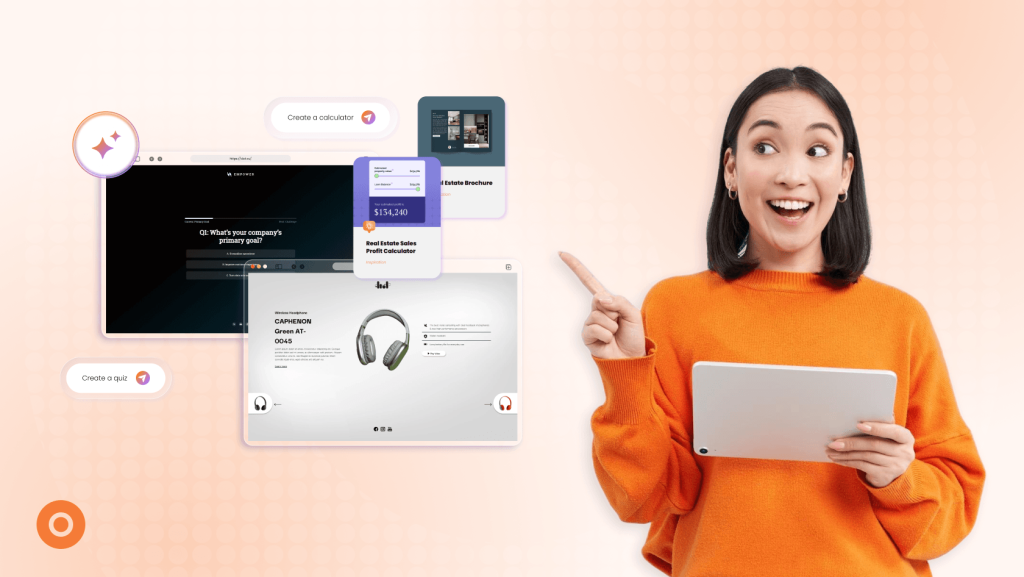
It can be used to build quizzes. Calculators. Assessments. Product recommenders. Games. Surveys. Popups and other Interactive Experiences. This helps to support audience engagement, lead generation, and campaign performance.
What Happens After Your Audience Notices Your Campaign?
Most marketing campaigns are built to get attention.
But attention alone is not enough.
For marketers, the real goal is not just getting someone to notice your campaign. It is getting them to take the next step.
According to HubSpot’s 2026 State of Marketing Report, lead-to-customer conversion is the 2nd most important KPI for marketers across businesses of all sizes. At the same time, 30% of marketers still say generating leads is one of their top challenges.
So the issue is not just visibility.
It is what happens after someone lands on your content.
You can have a strong landing page. A polished email. Or a beautifully designed ad. But if your audience only looks at it and moves on, the experience ends there. They have consumed the content.
But, they have not really interacted with your brand.
That is where Interactive Content changes the experience.
You get more than a view. A scroll. Or a polite little click. You get participation.
Of course, building these experiences from scratch can take time. That is why Interactive Content software matters. It gives you the tools to create, launch, and manage Interactive Experiences faster. All, without needing to rely on developers for every campaign.
The question is not just which platform has the most features.
The better question is: which Interactive Content software actually supports your marketing campaign strategy?
But before you start mentally opening 27 Interactive Content software comparison tabs, here’s what we’ll cover first.
- TL; DR
- What Happens After Your Audience Notices Your Campaign?
- What Is Interactive Content Software?
- What to Look for in Interactive Content Software
- How to Choose the Right Platform for Your Campaign Strategy
- Create Interactive Content Faster with Dot.vu
- Build Campaigns People Actually Want to Engage With
- Frequently Asked Questions
What Is Interactive Content Software?
Interactive Content software is a platform that helps marketers create. Publish. And manage Interactive Experiences. All, without building everything from scratch.
Instead of sending your audience to another standard landing page or PDF, you can invite them to take a quiz to find their best match. Or complete an assessment to see where they stand.
You can also get them to use a product recommender to narrow down their options. Or enter a Marketing Game that makes the campaign feel more fun and engaging.
Your audience gets something more relevant and useful. Your marketing team gets a clearer picture of what people care about. What they need. And where they are in the decision-making process.
Not exactly the same as asking someone to “download our shopping brochure”.
Not to send you down another software rabbit hole, but if Ceros is still on your comparison list, our blog can help you explore other options: Top 10 Ceros alternatives to create Interactive Content
What to Look for in Interactive Content Software
Choosing Interactive Content software can feel a little overwhelming because many platforms promise engagement. Personalization. Data capture. And campaign performance.
Helpful? Yes.
A lot to compare? Also, yes.
The easiest way to narrow it down is to look at whether the platform can support the way your team need to:
- builds campaigns
- measures results
- works toward marketing objectives
Easy campaign building
Your team should be able to create Interactive Experiences without needing developers for every small update.
Look for:
- software with a no-code or low-code builder
- Ready-made templates
- Drag-and-drop editing,
- Flexible design options.
This makes it easier to move from campaign idea to launch without turning every project into a production marathon.
Multiple Interactive Content formats
A good platform should support more than one type of Interactive Content.
That might include:
- Quizzes
- Assessments
- Calculators
- Product Recommender
- Surveys
- Marketing Games
- Interactive Flipbook
- Interactive Video
- Guided Selling experiences.
This matters because different campaign goals need different formats. A quiz may work well for audience engagement.
On the other hand, a calculator may be better for helping users understand value. A Product Recommender, in fact, may support conversion. While, an assessment may be stronger for lead qualification.
Personalization features
Interactive Content works best when the experience feels relevant to the person using it.
Look for features such as:
- branching logic
- conditional paths
- personalized outcomes
- dynamic recommendations
- tailored result pages
These features help users receive content or next steps based on their own answers, preferences, or needs.
That is where the experience starts to feel less generic and more useful.
Data capture and audience insights
One of the biggest advantages of Interactive Content is the data it can collect directly from your audience.
The right software should help you capture:
- responses
- Preferences
- pain points
- product/service interests
- intent signals
- contact details in a clear and organized way
This can support lead generation. Segmentation. Personalization. Sales follow-up. And future campaigns.
Instead of guessing what your audience wants, you can learn from what they actually choose and answer.
Integrations with your marketing tools
Interactive Content should not sit on its own little island.
Look for software that connects with:
- your CRMs
- email marketing platform
- analytics tools
- marketing automation system
- other tools your team already uses
This helps ensure the data you collect can be used after the interaction ends, whether that means sending a follow-up email. Updating a lead profile. Triggering a sales workflow. Or building a more personalised campaign journey.
Analytics and performance tracking
Audience engagement is useful. But, you still need to know what is working.
A strong Interactive Content software should let you track:
- Views
- Starts
- Completions
- drop-off points
- Leads
- Conversions
- User responses
These insights help you understand where people engage, where they lose interest, and which experiences are actually supporting your marketing objectives.
Because “people clicked on it” is nice.
But “this experience generated qualified leads and helped move users toward the next step” is much better.
AI-assisted building
AI can also make Interactive Content creation faster and easier, especially when your team is building campaigns regularly.
Look for software that uses AI to support the building process. Not just generate a few lines of copy and call it a day.
A useful AI builder should help you move from a campaign idea to a working Interactive Experience with less manual setup.
That could mean helping you:
- structure the experience
- suggest relevant questions
- shape result pages
- create user or content flows
- recommend the right format based on your campaign goal
For example, if you are planning a quiz or Marketing Game, it should help you get the first version in place faster.
The goal is not to let AI replace your marketing strategy. The goal is to use AI to speed up the build. Reduce production friction. More importantly, help your team focus on what matters most:
- your audience
- your objectives
- the next step you want users to take
How to Choose the Right Platform for Your Campaign Strategy
Choosing the right Interactive Content software should start with your campaign strategy, not just the feature list.
First, be clear on what you want the campaign to achieve. Are you trying to drive audience engagement? Generate leads? Educate buyers? Recommend products? Or collect customer insights?
Once the objective is clear, it becomes easier to choose the right format. A quiz may work well for awareness and engagement. An assessment can support lead qualifications. A calculator can help users understand value. A product recommender can guide people toward the right solution.
It also helps to think about what happens after the interaction. The platform should make it easy to collect useful data. Connect with your marketing tools. More importantly, turn user responses into meaningful follow-up.
The best platform is not always the one with the most features. It is the one that helps you build campaigns that are easier to launch. Easier to manage. And more useful for your audience.
Create Interactive Content Faster with Dot.vu
Once you know what to look for in Interactive Content software, the next step is finding a platform that brings those pieces together.
That is where Dot.vu comes in.
Dot.vu can help you and your team create Interactive Content without code, so you can build campaigns faster without starting from scratch every time.
With 350+ templates, from Product Recommenders and Flipbooks to Virtual Tours, Calculators, and Product Finders, Dot.vu gives marketers a faster way to turn campaign ideas into Interactive Experiences.
These Interactive Experiences are designed to do more than capture attention. They help you capture intent. Guide decisions. More importantly, qualify leads in real time, so every interaction can support your wider marketing goals.
Moreover, Dot.vu’s AI Interactive Builder makes the process even faster.
All you have to do is type your idea. Watch AI build it. And turn it into an Interactive Experience your audience can actually use.
Build Campaigns People Actually Want to Engage With
The right Interactive Content software should help your audience do more than view your campaign.
It should help them participate. Discover. Compare. Decide. And take the next step.
When your Interactive Content is connected to clear marketing objectives, it can support stronger audience engagement. Better lead generation. Smarter data collection. More importantly, supports effective campaign performance.
Start your 14-day free trial and see how fast your next campaign can go from “we should do something interactive” to actually live.
Frequently Asked Questions
Interactive Content software is a tool that helps marketers create and manage Interactive Experiences.
Interactive Content is digital content that invites users to actively participate instead of passively reading, watching, or scrolling.
Examples of Interactive Content include:
– Quizzes
– Virtual Tours
– Product Finders
– Assessments
– Calculators
– Product Recommenders
– Marketing Games
– Surveys
– Popups
Interactive Content improves audience engagement by giving users something to do. Instead of simply consuming information, they can answer, explore, calculate, choose, and receive more relevant results.
Interactive Content can support marketing objectives such as:
– brand awareness
– lead generation
– audience segmentation
– product education
– conversion
– customer retention
Marketers should look for easy campaign building, multiple Interactive Content formats, personalization features, data capture, integrations, analytics, and AI-assisted building.