TL;DR (Quick Summary)
Easter promotions marketing often underperforms because brands treat Easter as an “easy” seasonal moment and rely on recycled visuals or light discounts. Easter shopping behaviour is fast, spontaneous, and impulse-driven, which means promotions need to communicate value quickly and remove friction. The most effective Easter marketing campaigns combine clear offers with engagement, making participation easy and fun without overcomplicating the experience. Interactive formats help refresh familiar promotions, improve engagement, and make Easter campaigns more memorable — even within a short seasonal window.
The Problem with Most Easter Promotions
Easter is one of those marketing moments everyone thinks they’ve got handled.
Pastel colours? Check.
A small discount? Sure.
An egg graphic slapped on a banner five minutes before launch? Been there.
Compared to Black Friday or Christmas, Easter feels low-pressure. No massive budgets. No long planning cycles. Just something light, cheerful, and seasonal enough to look awake.
That “easy” perception is misleading. Easter isn’t a throwaway moment. According to the National Retail Federation, consumers are expected to spend over $23 billion on Easter, making it one of the biggest retail seasons of the year, just without the loud urgency of Black Friday or Christmas.
And yet… Easter marketing still underperforms more than it should.
A lot of Easter marketing ends up feeling rushed, recycled, or vaguely forgettable. Customers may not complain — they just scroll. When promotions look like a copy-paste of last year (or every other brand), engagement drops fast.
We’ve all shipped the pastel banner at least once. This is the part where we admit it and do better.
Table of Content:
- TL;DR (Quick Summary)
- The Problem with Most Easter Promotions
- How Consumer Behaviour Changes Around Easter
- What Customers Actually Expect From Easter Promotions
- Common Easter Marketing Mistakes That Hurt Promotion Performance
- Rethinking Easter Advertising Beyond Discounts
- Easter Promotions Marketing That Combines Offers with Engagement
- Using Interactive Content for Easter Marketing Campaigns
- Interactive Easter Promotion Examples That Feel Natural
- Where Easter Promotions Fit in the Customer Journey
- Planning Easter Marketing Campaigns Without Overcomplicating Them
- Measuring the Success of Easter Promotions Marketing
- Easter Promotions Work Best When They Invite Participation
How Consumer Behaviour Changes Around Easter
Easter doesn’t behave like other seasonal moments, and that’s where a lot of Easter marketing campaigns quietly go wrong.
It’s a shorter window, with less buildup and far less urgency. People aren’t planning weeks ahead or comparing options across multiple tabs. They’re browsing casually, clicking around between other tasks, and making decisions much closer to the actual holiday.
That also means Easter promotions are more impulse-driven. Shoppers are more likely to act on something that’s immediately clear and easy to understand. If a promotion takes effort to decode, requires too many steps, or hides the value behind clever messaging, it’s already lost.
That behaviour shows up clearly in what people actually buy. 92% of consumers plan to buy candy and 89% plan to buy food for Easter — categories that are typically last-minute, low-research, and driven by convenience rather than comparison. Easter shopping happens close to the holiday and rewards promotions that are fast, obvious, and easy to act on.
This is why clarity and immediacy matter more than complexity during Easter. Promotions need to work fast. The value should be obvious within seconds — not buried under long explanations or overly designed visuals.
Creative Easter marketing campaigns respect how quickly people move during this window. Bad ones assume attention they haven’t earned.
What Customers Actually Expect From Easter Promotions
Here’s the thing marketers sometimes forget about Easter: customers aren’t shopping with a mission.
This isn’t Black Friday, where people are price-tracking for weeks. It’s not Christmas, where lists, budgets, and expectations are locked in early. Easter sits in a much softer mental space. People are browsing. Killing time. Clicking around while waiting for something else.
So expectations are lower — but tolerance for friction is also way lower.
Most customers aren’t looking for a massive deal. They’re looking for something that feels worth their attention right now, without forcing them to commit, compare, or overthink. That tracks with consumer data too. While promotions do influence Easter purchases, about 36 % of shoppers say sales or promotions influence their Easter purchases, showing that deals do matter — but not as much as tradition and value combined
That’s why Easter promotions tend to perform better when they focus on:
- Removing hesitation, not just lowering prices
- Speed, not depth
- Perceived value, not complexity
Free shipping works because it eliminates a common blocker.
Bundles work because they simplify decisions.
Loyalty rewards work because they feel earned, not forced.
Limited-time perks work because they create just enough urgency without pressure.
The mistake brands make is assuming Easter shoppers want to be convinced. Most of the time, they just want reassurance that clicking “yes” won’t be annoying.
Easter marketing works best when it feels light, low-stakes, and easy to engage with. The second it starts feeling like homework, people bounce.
Common Easter Marketing Mistakes That Hurt Promotion Performance
A lot of Easter campaigns don’t fail because they’re bad — they fail because they stop at looking seasonal. The most common Easter promotions mistakes aren’t dramatic. They’re subtle, and they quietly eat performance.
Targeting everyone the same way
Easter feels universal, so messaging gets broad. But different segments respond to different incentives — and with a short campaign window, weak targeting costs.
Relying on visuals without a hook
Pastels and eggs signal “Easter,” but they don’t give a reason to engage. Without clear value, design is just decoration.
Ignoring mobile experience
Easter browsing is mostly mobile. Slow loads, tiny buttons, or clunky flows kill interest fast.
Poor discoverability
If Easter promotions are buried behind banners or hidden pages, they might as well not exist. No one hunts for an offer.
This also aligns with broader Easter shopping trends. While promotions do influence purchase decisions, they’re rarely the only reason someone buys. That’s why value-driven incentives often outperform heavy discounting during Easter.
Easter marketing can look polished and still underperform. Aesthetic effort doesn’t automatically drive action.
Rethinking Easter Advertising Beyond Discounts
Discounts aren’t the problem. Over-reliance on them is.
When every Easter advertising campaign leans on the same discount mechanic, brands end up competing on noise instead of attention. Customers stop noticing the offer itself and start mentally categorizing it as “just another seasonal promo.”
During Easter, attention is the real constraint. People are scrolling fast, clicking casually, and moving on quickly. If advertising doesn’t invite participation, it blends into the background — no matter how good the offer is.
This is where Easter advertising ideas need to shift focus. Instead of asking, “How much can we discount?” the better question is, “How do we earn a few extra seconds of engagement?”
Participation changes the dynamic.
When people get to reveal, choose, play, or explore, they’re no longer passive viewers. They’re involved — even briefly — and that moment of involvement makes the promotion more memorable.
Engagement doesn’t replace offers. It amplifies them.
Easter Promotions Marketing That Combines Offers with Engagement
This is where Easter promotions marketing starts pulling its weight.
Traditional offers work better when they’re paired with interaction — not because interaction is flashy, but because it creates momentum.
Discounts enhanced with interaction
Revealing a discount, unlocking it, or earning it through a simple action adds anticipation. The offer feels more intentional, even when the value stays the same.
Bundles with product discovery
Instead of listing bundles and hoping customers pick the right one, guide them there. A short interactive flow can help shoppers feel confident about their choice instead of overwhelmed.
Free shipping and instant rewards
These incentives benefit from immediacy. When paired with simple confirmation or interaction, they reinforce value instead of feeling generic.
Loyalty-driven Easter promotions
Rewarding existing customers through seasonal experiences makes loyalty feel emotional, not transactional.
This is why Easter interactive posts often outperform static promotions. They don’t change the offer — they change how people experience it.
Using Interactive Content for Easter Marketing Campaigns
Easter is one of the few seasonal moments where playfulness feels natural rather than forced.
Games, calendars, and guided experiences align with the mood of the season. They invite curiosity without asking for long-term commitment, which makes them ideal for short campaign windows.
Interactive formats also create small emotional wins. A reveal, a result, or a moment of surprise gives customers something to react to — not just something to read.
This matters because Easter marketing campaigns don’t have time to build momentum slowly. Interaction accelerates engagement by giving people a reason to stay just a little longer.
When done right, interactive content supports the promotion instead of distracting from it. The offer stays clear. The experience just makes it more engaging.
Interactive Easter Promotion Examples That Feel Natural
Not every interactive idea belongs in an Easter campaign. The strongest ones solve specific seasonal problems.
AI-built Easter promotions
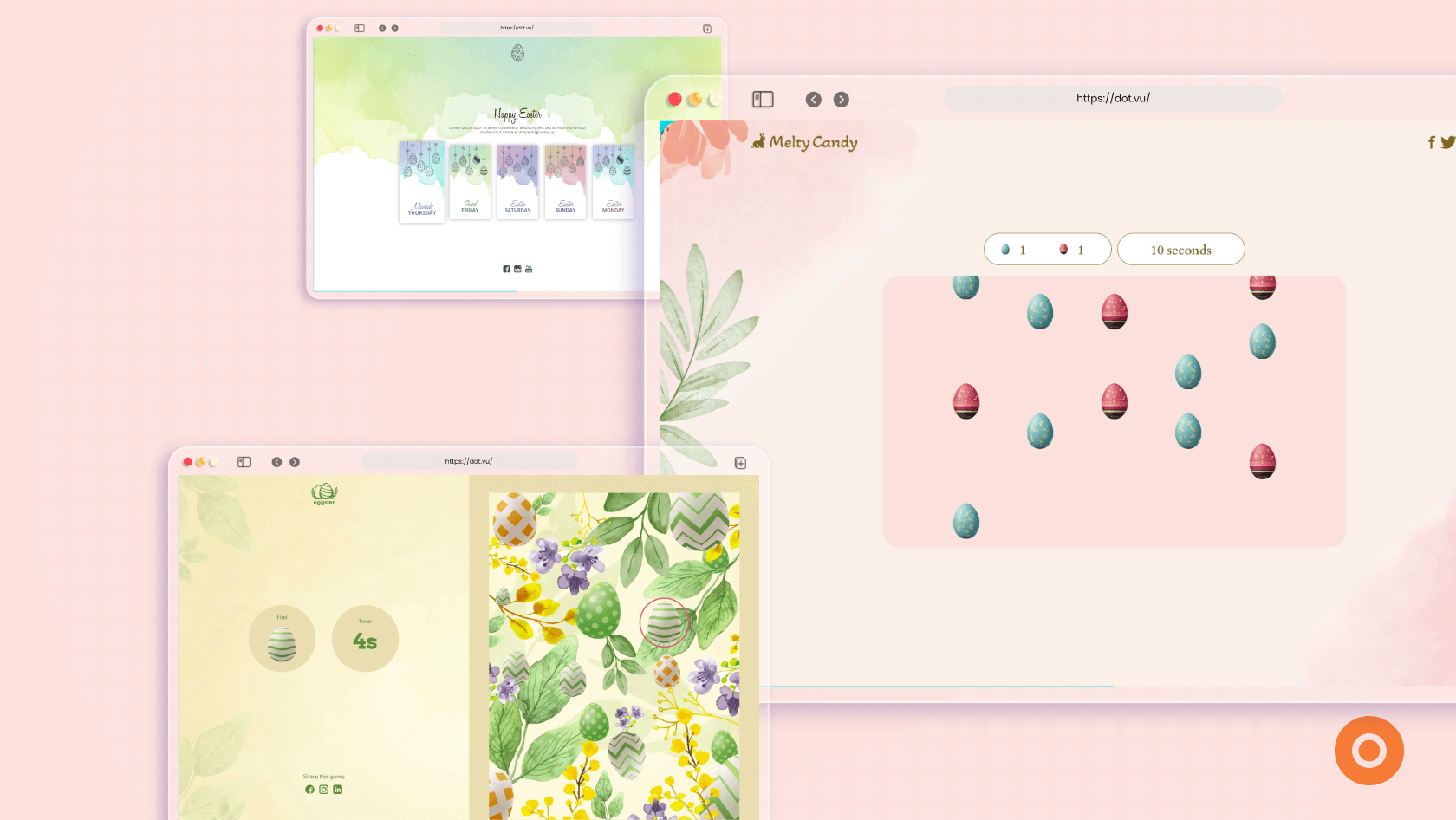
AI-built experiences are a practical option for teams that need to move fast or experiment with new ideas. With Dot.vu’s AI Interactive Builder, you can generate Easter-themed games, product finders, or lead experiences from a prompt, then refine them to fit the campaign and brand tone.

Game-based Easter promotions
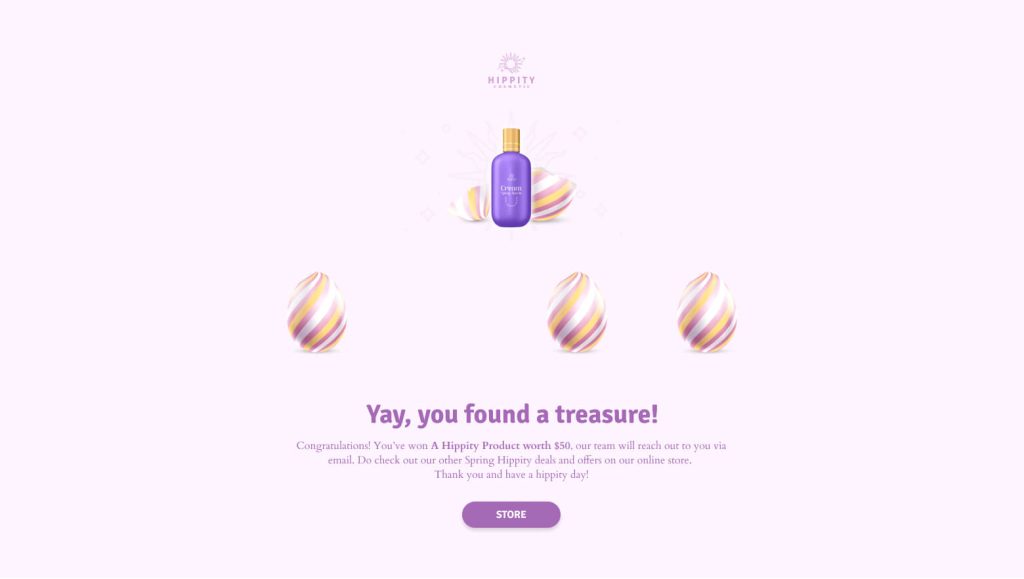
Marketing Games like “Find the Egg” or “Pick an Egg” work well because they combine curiosity with reward. They capture attention quickly and make offers feel playful instead of pushy.

Countdown-style Easter promotions
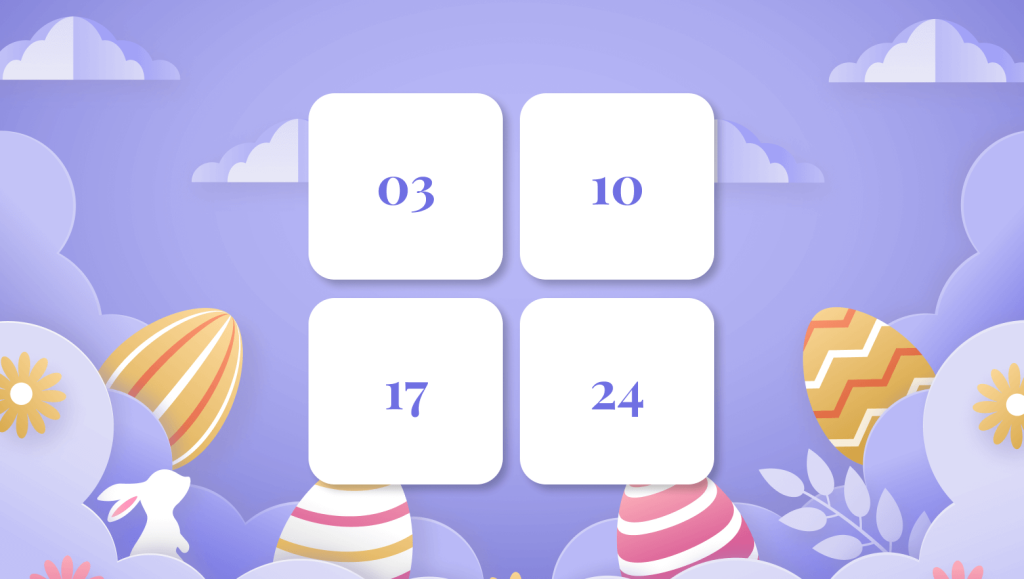
An Online Easter Advent Calendar spreads engagement across multiple days without overwhelming customers. It extends the lifespan of a short campaign while keeping participation simple.
Guided Easter product discovery
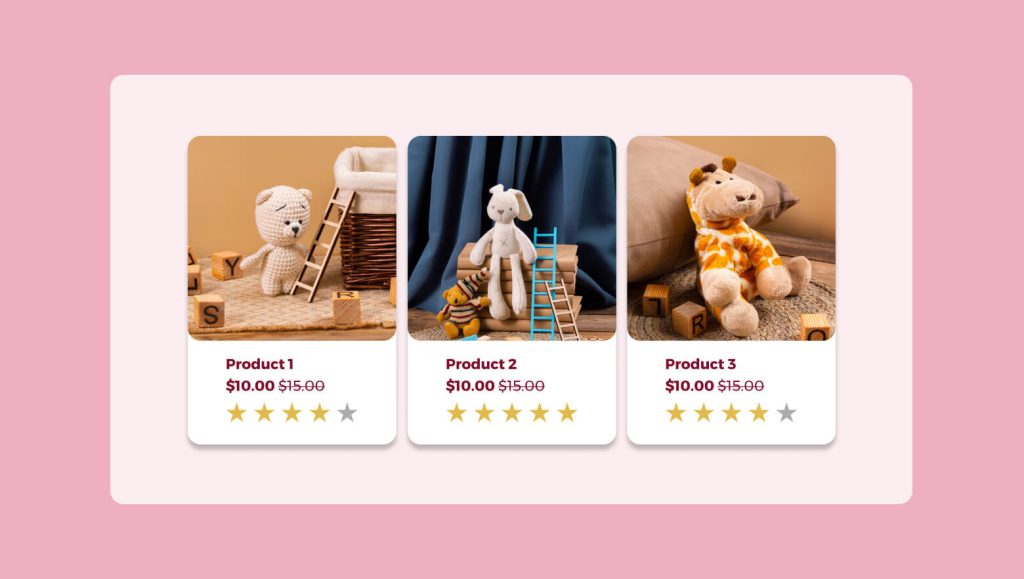
Product finders help customers move from browsing to decision-making faster. They reduce hesitation and support higher-confidence purchases during a casual shopping period.
Where Easter Promotions Fit in the Customer Journey
One of the biggest reasons Easter promotions underperform is because brands expect every campaign to do the same job. They can’t.
Easter sits in an awkward spot in the customer journey. People aren’t planning far ahead, but they’re not disengaged either. That means Easter promotions work best when they support different stages — not when everything is forced to convert.
- At the awareness stage, Easter marketing should stay light and low-pressure. It’s about showing up in a seasonal, approachable way, not pushing for a sale.
- At the engagement stage, promotions earn attention. Interactive elements, games, or discovery experiences give people something to do, even if they’re not ready to buy yet.
- At the conversion stage, speed matters. Offers need to be obvious and friction-free. Discounts, bundles, free shipping — simple incentives that work now, not later.
The problem starts when every campaign is treated like a last-chance sale. When everything screams “BUY NOW,” people tune out. Easter promotions marketing works better when each campaign has a clear role and the pacing doesn’t overwhelm.
Seasonal fatigue sets in quickly. Strategic pacing keeps people interested instead of overwhelmed.
Planning Easter Marketing Campaigns Without Overcomplicating Them
Easter campaigns don’t need a massive roadmap, but they do need a plan that makes sense for how short the season actually is.
A common mistake is overbuilding. Too many ideas, too many variations, too much creative for a campaign that only runs for a couple of weeks. The result? Inconsistent messaging and half-finished executions.
In reality, most Easter marketing campaigns perform best when they launch closer to the season, not months in advance. Audiences aren’t thinking about Easter early, so early launches often waste energy instead of building momentum.
The smarter move is to build one strong promotion and reuse it across channels. The same core experience can live on a landing page, in email, across paid media, and on social — with minor tweaks, not full reinvention.
Cohesion matters more than heavy theming. Easter marketing should feel seasonal without turning into an explosion of pastel visuals and egg icons everywhere. When everything screams “Easter,” nothing stands out.
Keeping things simple also makes execution easier:
- One clear value proposition
- One main promotion mechanic
- One experience adapted across channels
Simple structure doesn’t mean boring. It means focused. And focused campaigns almost always perform better during short seasonal moments like Easter.
Measuring the Success of Easter Promotions Marketing
Revenue matters — but judging Easter promotions only on sales misses context.
Easter campaigns are short and impulse-driven, often higher in the funnel. That makes engagement metrics especially important.
Interaction rates show curiosity. Completion rates show whether the experience held attention. Time spent reveals whether people actually cared — or just clicked and left.
During Easter, attention is limited. If someone stays, interacts, and finishes, that’s meaningful.
Strong engagement can also support future results, especially when paired with retargeting or follow-up campaigns.
Impressions alone don’t say much. Attention does.
Easter Promotions Work Best When They Invite Participation
Easter promotions don’t fail because the season is boring. They fail because they’re treated like filler.
What actually works is meeting people where they already are: browsing casually, deciding fast, and skipping anything that feels like effort. Easter marketing performs best when promotions are clear, easy to engage with, and give people a reason to participate instead of just scroll past.
You don’t need louder messaging or bigger discounts. You need intention.
If you’re rethinking your Easter promotions this year, you can create a free trial account and try out Easter templates designed to combine offers with engagement. You can also check out the 12 Easter Marketing Ideas guide for inspiration, or explore interactive Easter promotions using Dot.vu.
Same season. Better execution. Less pastel panic.