TL; DR
AI marketing trends in 2026 aren’t about who’s using AI anymore — most teams already are.
What’s changing is how. And the distance between brands doing it well and brands just doing it? That’s only getting wider.
Most brands have AI somewhere in their marketing by now. The difference isn’t access. It’s whether AI is actually helping make better decisions or just making things faster.
This blog will cover what’s really shifting in AI marketing right now:
- Generative Engine Optimization (GEO): Moving beyond traditional SEO to ensure your content is structured and easily readable for AI search assistants and recommendation engines.
- Synthetic Data for Hyper-Personalization: Using AI-generated digital models of audience segments to build personalized journeys without relying strictly on historical, privacy-restricted data.
- Creative Intelligence: Going beyond content generation to use AI for real-time testing, predicting ad performance, and estimating engagement before a campaign even launches.
- Predictive Marketing: Leveraging pattern recognition to anticipate customer behavior, identify conversion likelihood, and pinpoint the exact right time to engage.
- Dynamic Customer Journeys: Moving away from static segments to shape real-time, individualized experiences based on a user’s immediate browsing and search actions.
Why AI Matters for Marketing in 2026?
AI isn’t the new thing in marketing anymore. It’s the expected thing.
Most teams have moved past the “should we use this?” phase. The tools are there. The adoption is there. What’s still catching up is how well teams actually use them.
In fact, 75% of global marketers say they’re excited about what generative AI can do. The interest isn’t the question. The execution is.
Here’s what’s actually shaping AI marketing in 2026 — and where the real opportunities sit.
Top AI Marketing Trends in 2026
From SEO to GEO
Think about how your customers actually find you today.
For years, the answer was search engines. You optimize for Google. Everyone does.
But in 2026, more people are turning to AI assistants to find:
- Information
- Products
- Recommendations
In fact, 74% of users now rely on AI-driven recommendations when searching online. That means you can’t rely on SEO only.
This is where Generative Engine Optimization (GEO) becomes important.
Instead of focusing only on keywords. Or search rankings. In fact, GEO looks at how your content appears in AI-generated answers. If it can’t clearly understand what your brand does, it’s unlikely to recommend it.
So, what does that mean in practice? Your content needs to be clear. Well-structured. More importantly, it is easy for both people and machines to make sense of.
Synthetic Data Meets Hyper-Personalization
Next comes personalization, arguably one of the most critical AI marketing trends in 2026.
Your audience expects recommendations that feel relevant to them. The problem is doing this at scale while still respecting privacy.
That is where synthetic data enters the picture.
Instead of relying entirely on real customer data, synthetic data creates digital models of audience segments.
These models allow marketers to:
- Simulate behaviors
- Test scenarios
- Uncover patterns that might otherwise go unnoticed
The result?
You can build more thoughtful and personalized customer journeys without depending solely on historical data.
Creative Intelligence and Real-Time Testing
Did you know AI is also changing the creative side of marketing?
In fact, most companies are using AI to:
- Draft blog posts
- Write captions
- Experiment with design ideas
But AI tools are starting to do more than just generate content.
Some of these tools can now help you predict how an ad might perform before it even launches.
In fact, it analyzes elements like visuals. Headlines. Messaging.
These tools can also estimate which creative assets are more likely to capture attention and drive engagement.
Predictive Marketing
Predictive marketing is another of the defining AI marketing trends in 2026, completely changing how you plan your campaigns.
Instead of waiting to see what happens next, you can use AI to:
- Spot patterns in past data
- Get a sense of what might happen next.
That could mean identifying which of your audiences is more likely to convert. Or figuring out when customers are most likely to engage.
It can also flag your customers who may be losing interest or suggest a better time to send a campaign.
Customer Journeys
AI is changing how customer journeys get built. More importantly, how they feel.
Instead of pushing everyone through the same path, teams can now shape the experience around what someone actually does. It can also help you plan your marketing strategy better.
What they click. What they browse. What they are searching for.
That data can shift everything — the content they see, the products they’re shown, the emails they get, even the landing page they land on. Not because a marketer manually sets up fifteen segments. Because the system is responding in real time.
When it works, the result feels more personal.
How Can You Use AI in Marketing?
Plan and Create Content
One of the most practical ways to use AI in marketing right now is for content support.
Most marketers know the feeling. Blank page. Deadline approaching. Nothing is coming together.
That’s where AI can help. It can take care of some of the heavy lifting and help you:
- Spin up fresh blog topics
- Generate new angles for social media
- Draft the messy first version of a campaign message
- Outline articles, suggest scroll-stopping headlines, and map out your content calendar
The applications are practically endless. But should you just copy, paste, and publish it? Definitely not.
AI-generated text still desperately needs a human touch.
Instead, take time to review and adjust the content, so it aligns with your brand.
Optimize Your Campaigns with AI
How often does your team spot a failing campaign only after the budget is spent?
AI helps prevent that. By constantly analyzing campaign data, it can spot problems early and highlight what isn’t working, so teams can adjust before it’s too late.
Get Better Understanding and Insights on Your Customers
Beyond optimization, are you truly seeing the whole picture of your customer’s journey? Or, just the fragments they leave behind?
It’s important to know that your customer behavior has always been central to your marketing insights.
In fact, understanding your buyers should always be your main goal. AI pulls all that scattered data together instantly and this reveals exactly what your customers want.
By analyzing data from different sources, it can uncover trends that might otherwise go unnoticed. It can show which products customers explore most often.
How do they interact with different types of content? What factors influence their purchasing decisions?
Engage Your Customers Through Interactive Experiences
Static content asks people to read. Interactive Content challenges them to do participate.
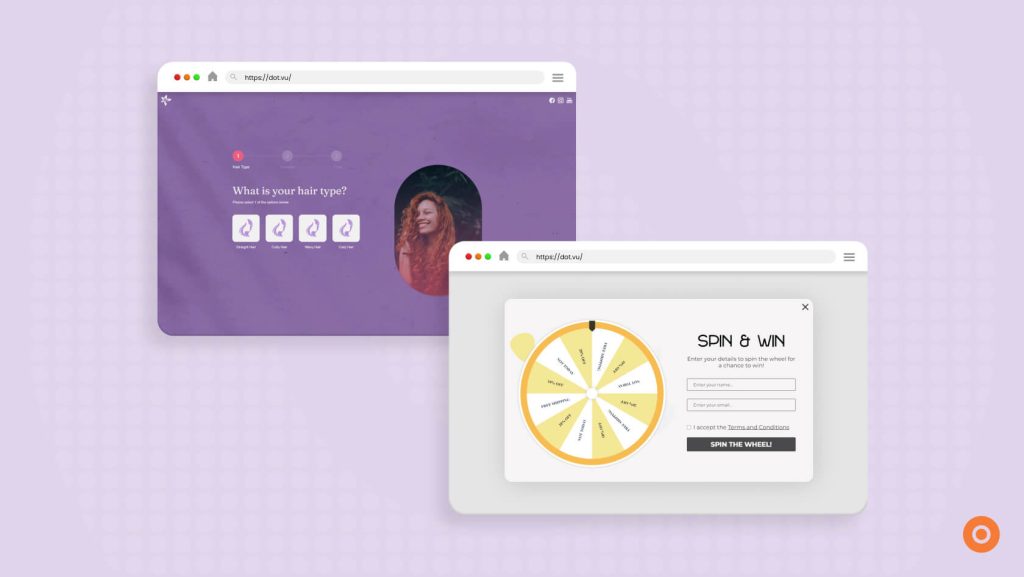
Quizzes. Videos. Pop-ups. Personalized landing pages. These are ways to turn passive scrolling into actual engagement. And AI makes building them faster and easier to tailor at scale.
It’s not just a theory either. 93% of marketers say Interactive Content is effective at educating buyers.
But the value goes beyond attention. Interactive Experiences help you explain complex ideas, keep people engaged longer, and move them closer to a decision — all in one touchpoint.
Start Creating Interactive Marketing with AI
No doubt that AI is becoming more and more important for your marketing. And having said that, it’s important that you become proactive in your AI adoption in your marketing strategies.
Brands that begin experimenting with AI now will be better ready for what’s ahead. The ones that delay may struggle to keep up.
In fact, tools like Dot.vu’s AI Interactive Builder make it easier to create Interactive Experiences. Streamline workflows. More importantly, gain measurable marketing insights.
These tools will play an important role in helping you stay competitive in 2026 and beyond.
So, why don’t you give it a try and create a trial account today? Start using Dot.vu’s AI Interactive Builder for yourself. See how you can create Interactive Content in minutes for something that would normally take hours.