TL’DR
Every business needs a blueprint for turning early interest into closed deals. That is exactly what your marketing funnel strategy provides.
But the goal isn’t to just hustle people through a set of predetermined stages. A truly effective setup matches the natural rhythm of your buyers. You want to clear the path for them, stripping away any friction so choosing your product becomes an easy, obvious choice.
In this blog, we break down the core marketing funnel stages, the marketing funnel metrics that matter most, and how automation, Interactive Content, and better buyer signals can improve performance across the full journey.
Everyone Talks About Marketing Funnel Strategies. Fewer Build Them Well.
On paper, marketing funnels look simple. You grab attention, build some interest, and drive a conversion. But real customer behavior rarely works smoothly.
Your buyers bounce around different channels without warning. They weigh their options on their own schedule and usually need a lot more than a few scattered touchpoints before they actually buy something.
Treating your marketing funnel strategy like a simple chart leaves you without a cohesive plan. You just end up running disconnected tactics and guessing at what works.
What Is a Marketing Funnel Strategy?
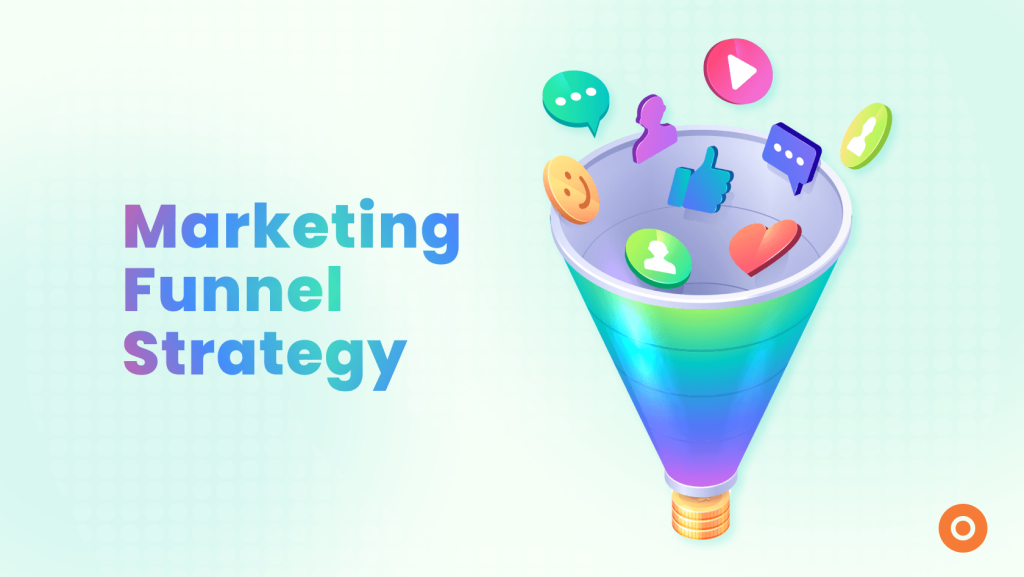
A marketing funnel maps a buyer’s path from discovery to purchase. It organizes your ads, content, and touchpoints into a trackable blueprint.
They often simplify the traditional AIDA model (Awareness → Interest → Desire → Action) into three main stages:
- Top of the funnel (TOFU): Awareness
- Middle of the funnel (MOFU): Consideration
- Bottom of the funnel (BOFU): Conversion
You might also see different variations that tack on loyalty and advocacy at the bottom. That makes total sense, considering the relationship shouldn’t just stop at the checkout line. Regardless of the specific labels you prefer, the goal is identical: creating a defined path to pull in leads and close deals.
So, where does the marketing funnel strategy come in?
A full funnel marketing strategy alone is just an outline. Your strategy is the actual game plan. It determines the specific messages you send, the content you publish, and the platforms you use to nudge someone forward.
Marketing Funnel Stages and Strategies for Each One
A marketing funnel usually has three main phases:
Awareness
To pull that off, you have to spark some genuine curiosity.
At the top of the funnel, your buyers are just figuring out who you are or waking up to a problem they need to solve. Pitching them hard right now will backfire. They are simply browsing and gathering basic information.
That usually means using content and campaigns designed to attract attention and spark interest, such as:
- blog posts
- social content
- search ads
- display campaigns
- landing pages
Consideration
Once your audience hits the middle of the funnel, the casual browsing stops. Now, they are actively evaluating. They know they have an issue to fix, so they start comparing you against competitors and hunting for actual proof.
Simply dropping facts will not cut it anymore. You have to step in and guide their thought process.
That might include:
- Guides using Interactive Flipbooks
- email nurture content
- case studies
Conversion
Down at the bottom, everything revolves around the final action. Your prospect is finally ready to book that demo, start a trial, or pull out their credit card. They have outgrown top-of-funnel educational blogs. Now, they just want an easy path to the finish line.
Because of this, your final touchpoints have to be incredibly focused.
Common examples include:
- product demos
- lead forms
- free trial pages
Loyalty
This is where plenty of marketers call it a day once a sale closes. However, the smartest ones keep building outward to include loyalty.
A closed deal is really just the beginning. Keeping your buyers engaged and giving them reasons to keep coming back brings in way more revenue than a single transaction. So, while people always talk about a three-stage model, a real strategy goes much deeper.
Marketing Funnel Strategy vs. Customer Journey
People mix these two concepts up constantly.
The marketing funnel strategy is your internal playbook. It outlines the specific, orderly steps you want someone to take before buying.
The customer journey reflects the true complexity of buyer behavior. It captures genuine objections, cross-channel research, and internal evaluations that happen before a purchase.
Understanding this gap is important. Your internal chart might look perfectly organized, while the buyer’s reality is completely chaotic. A truly effective digital marketing funnel strategy bridges that gap by adapting to how people actually behave.
Marketing Funnel Metrics That Actually Matter
Avoid the temptation to measure every possible data point.
Vanity metrics look great in a slide deck but tell you absolutely nothing about revenue. The whole point of tracking data is to spot friction and see what is actually working.
Awareness Metrics
Right now, you just want to know if people are looking. Watch these numbers:
- reach
- impressions
- click-through rate (CTR)
- traffic sources
- engagement rate
These figures tell you if your content is grabbing eyeballs or getting totally ignored.
Consideration Metrics
Now you need to see if visibility is turning into genuine interest. Track these areas:
- time on page
- quiz starts and completions
- lead magnet downloads
- email signups
- return visits
When these numbers go up, it proves prospects are digging deeper and showing real intent.
Conversion Metrics
This is where performance gets concrete. Look at these figures:
- conversion rate
- cost per lead
- demo bookings
- sales-qualified leads
- purchase rate
These are the data points that prove whether your marketing is actually driving business results.
Retention Metrics
As we covered earlier, a smart strategy goes past the initial sale. Keep an eye on:
- repeat purchase rate
- churn
- customer satisfaction
- upsell performance
Tracking these ensures buyers are staying engaged and getting long-term value from your brand.
How Marketing Funnel Automation Scales the Strategy?
Marketing funnel automation amplifies a solid plan, but it will not build the foundation. You still need your messaging, offers, and stages fully mapped out before you begin.
Where automation excels in handling repeatable tasks at scale. This includes:
- executing email sequences
- nurturing and scoring leads
- segmenting audiences
- routing prospects to the right sales teams
Handling these tasks automatically saves time and ensures teams respond faster. However, automation cannot fix a flawed foundation.
If your message is muddy, your timing is bad, or your customer journey is bland, software simply speeds up your failure rate. For automation to drive real results, you need sharp data signals. Once buyers actively tell you what they want, you can trigger follow-ups that hit the mark.
B2B Marketing Funnel Strategy Has Its Own Challenges
Unlike impulse consumer buys, B2B choices involve dragging out sales cycles, convincing entire committees, and endless research.
This reality completely flips your funnel strategy. Gimmicks won’t cut it. A real B2B marketing funnel strategy demands heavy-hitting educational content, ruthless lead qualification, and zero friction between marketing and sales.
Interactive Content bridges that gap. By using tools like Guided Selling or Interactive Video, you help buyers untangle complicated info while simultaneously grabbing real intent data for your sales floor.
Where Dot.vu Fits into a Marketing Funnel Strategy?
A marketing funnel works best when it helps your audience engage, evaluate, and move forward without friction. That is where Dot.vu fits into your strategy.
The Dot.vu AI Interactive Builder eliminates the technical hurdles of creating these assets. It allows you to:
- Just type out what you need, and the AI automatically builds a fully functional Interactive experience.
- Every component is generated with the correct logic, triggers, and layouts already perfectly in place.
Best of all, you never need a developer. Every generated component is completely no-code, fully brandable, and 100% editable inside the Dot.vu Studio.
Whether you want to tweak the design, adjust the flow, or save the component as a reusable building block for future campaigns, you have complete control.
Our Interactive Content platform does more than just hold attention. They actively capture zero-party data directly from your buyers and sync it straight to your CRM. Instead of guessing what your audience wants, you secure the exact input needed to power highly relevant, personalized follow-ups.
It is the quickest way to turn static funnel stages into active touchpoints that benefit both your team and your buyers.
Building a Marketing Funnel That Actually Performs
A great marketing funnel strategy does not just move people into the next stage. It actively removes friction and provides clarity.
Top-performing funnels prioritize what the customer requires, rather than just the numbers a marketing team wants to report. This is where Interactive Content changes the game. It gives marketers the exact data signals they need while helping the customer make an easier, faster decision.
Stop relying on static touchpoints. It is time to create experiences that engage your buyers. Collect real input. Drive action at every step.
Start your 14-day free trial and build a marketing funnel strategy that will get you the results you want.